

A door that sticks after heavy rain. A thin gap at the top corner. A hinge screw that keeps coming loose. Tiny holes in the wood near the floor. Most homeowners notice these problems only after a few years in the house, and by then the fix is messy and expensive.
The cause is often the door frame, a part few people think about while planning a home. A WPC door frame is one option that can reduce these problems, but only if you choose it well. This guide explains how frames fail, what separates a good WPC door frame from an average one, and what to check before buying. Ocean Lykewood is mentioned as one example of a brand offering WPC products.
Why the Door Frame Matters More Than You Think
The frame carries the full weight of the door. Every time the door opens, the hinge points take a small load, and over thousands of cycles that adds up. The frame also keeps the door square to the wall, so gaps stay even and the lock lines up.
When a frame weakens, the signs show up in the door first. It rubs at the top or side, the latch misses the strike plate, new gaps appear, or hinge screws loosen again and again. Because these look like door problems, people repair the door and leave the real cause untouched. Choosing a durable door frame material at the start prevents this.
Common Problems with Traditional Wooden Door Frames
Wood is a good material, but it reacts to its surroundings. In areas with a long monsoon, a few issues come up often:
- Swelling and shrinking. Wood absorbs moisture in the rains and dries out in summer. This repeated movement loosens joints and throws the door out of alignment.
- Decay at the bottom. The lower part of a frame sits closest to mopping water and rising damp, which is where rot usually starts.
- Termite damage. Termites often work from inside, so the surface can look fine while the wood is hollowed out behind it.
- Constant upkeep. Polishing, painting, and filling cracks are ongoing tasks.
Well-seasoned, properly treated hardwood can last a long time, but it needs good material, good treatment, and regular care. The real question is whether you want to commit to that upkeep, or prefer a low maintenance door frame.
What to Look for in a WPC Door Frame
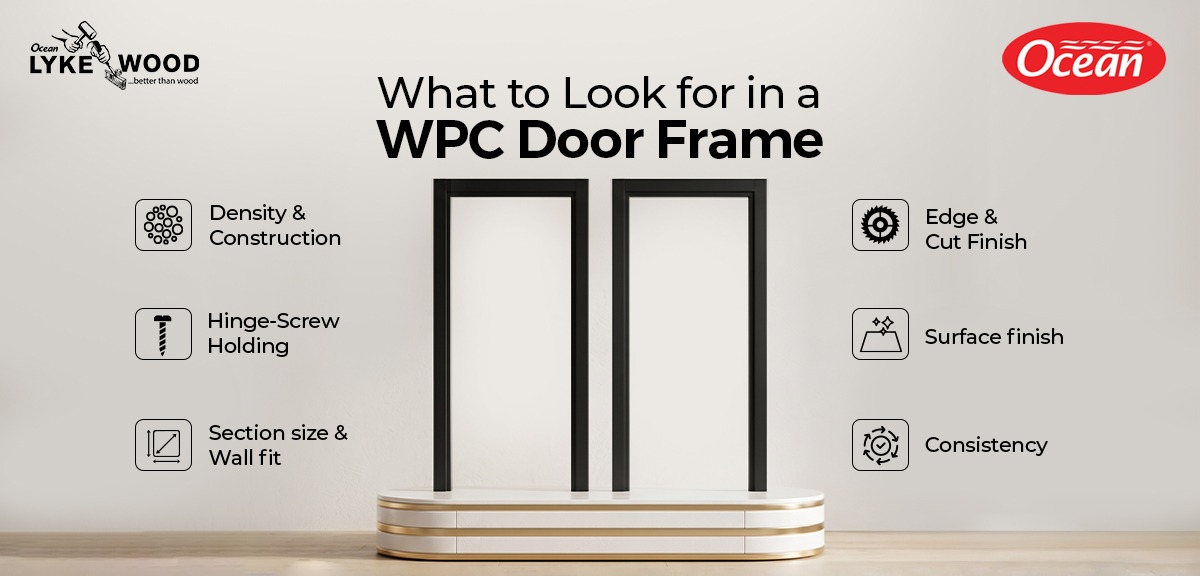
A WPC (wood plastic composite) door frame combines wood-based material with polymers and is designed to resist moisture and termite feeding. But two WPC frames can look identical and perform very differently, so product quality matters more than the material name.
Density and construction. A denser profile holds screws better and resists dents. Ask whether the frame is solid or hollow and whether it has internal reinforcement.
Hinge-screw holding. Hinge points take the most stress, so this is the most important check. Ask how well the frame holds screws over time, especially for a heavy main door, and request test data or a written statement.
Section size and wall fit. A heavy main door needs a stronger section than a light bathroom door. The frame depth should also match your wall thickness so there are no large gaps to fill.
Edge and cut finish. Cut ends and drilled holes are the weak spots of any frame. Ask how and with what they should be sealed.
Surface finish. If you plan to paint or laminate later, confirm which primer or adhesive suits the product.
Consistency. Look at more than one piece. Straight lines, even color, and tight corner joints point to good manufacturing control.
Is a WPC Door Frame Suitable for Wet Areas?
WPC absorbs far less moisture than many wood products, which makes it a good moisture resistant door frame option. It suits a door frame for bathroom, utility area, kitchen, and balcony use, as well as humid or coastal locations. Keep in mind that “water-resistant” and “waterproof door frame” are not the same claim, and a good material cannot make up for poor detailing. Water usually enters through the wall, the floor, or the joints, not through the frame itself.
- Floor level. The bottom of the frame should not sit in standing water. A small raised threshold or a proper floor slope helps.
- Wall and frame joint. Seal the gap with a suitable sealant, not just plaster.
- Wall waterproofing. In bathrooms, the wall around the doorway needs proper waterproofing.
- Exterior doors. Provide rain protection above the door so water does not run down the frame all season.
- After the first monsoon. Inspect corners and joints for seepage. A small leak is cheap to fix early.
WPC Door Frame vs Wood vs Metal
No material is best for every room. Choose based on moisture exposure, door weight, appearance, upkeep, and budget.
| Factor | WPC | Wood | Metal |
| Durability | Good, if product and installation are good | Depends on wood type and treatment | Generally high |
| Moisture | Low absorption | Can swell, warp, or rot if unprotected | Can rust if the coating is damaged |
| Termites | Resistant to feeding | Can be vulnerable | Not a food source |
| Maintenance | Generally low | Regular polishing or painting | Touch-ups if the coating chips |
| Repair | Damaged section may need replacing | Often repairable | Can often be repainted or re-welded |
| Appearance | Clean, modern, wood-like finishes | Natural grain and warmth | Sleek, industrial |
Wood suits a traditional main door, metal suits heavy-duty use, and WPC suits humid or termite-prone areas where you want low upkeep.
Door Frame Cost and Lifespan
When comparing a WPC door frame vs wood door frame, do not look only at the purchase price. The door frame cost over time includes installation, repainting, repairs, and the cost of replacing a frame that fails early. Over 10 to 15 years, a cheaper frame that needs repairs can cost more than a better one that is never touched. Ask for an installed quote so you compare like with like.
Door frame lifespan also varies. It depends on the formulation, thickness, moisture exposure, installation quality, and care. No single number applies to every product, so check the warranty and technical details for the one you are considering.
How to Choose the Right Door Frame
Take this checklist to the supplier and apply it to every brand:
- What are the density and thickness of this profile?
- Is it solid or hollow, and is there reinforcement?
- How well does it hold hinge screws, and is there test data?
- What is the maximum door weight it is designed for?
- Is it recommended for bathrooms and exterior use, and under what conditions?
- Can it be painted or laminated, and with which products?
- What does the warranty cover, and what are the installation conditions?
- Can I see a sample or an installed example?
Installation matters too. Many frame problems come from fitting, not the product. Ask your installer how many fixing points will be used, and make sure the frame is perfectly vertical and square, because a small error becomes a sticking door later. Use proper packing at fixing points so the frame does not twist, and confirm hinge type, pilot-hole size, and screw length with the supplier. Cover the frame during plastering and painting, and avoid fitting into a very wet wall.
Mistakes to avoid: choosing by looks and price alone, assuming all WPC products are equal, skipping termite control, ignoring dampness near the doorway, leaving cut edges unsealed, and not reading the warranty.
A Better Doorway Starts with the Frame
A door frame works quietly, but it decides how smoothly your doors close, how well they handle the monsoon, and how much repair work you face later. A WPC door frame is a smart choice when moisture, termites, and upkeep are your concerns, and the best results come from pairing a quality product with correct installation and proper wall and floor detailing.
Building or renovating? Don’t wait for a sticking door or a swollen frame to act. Ask for technical specifications, see a sample in person, and get a full installed quote before you decide.
Ready to choose a frame that lasts? Explore the WPC door frame range from Ocean Lykewood, compare it with any other brand on your list, and pick the one that suits your home, your climate, and your budget.
FAQs
-
What is a WPC door frame?
A WPC door frame is made from wood plastic composite, which combines wood-based material with polymers and additives. It is designed to resist moisture and termite feeding better than many natural wood frames.
-
How do I know if a WPC door frame is good quality?
Ask for technical specifications, check for straight profiles, clean edges, and even color, and read the warranty. A supplier who can explain density, thickness, and testing is usually more reliable.
-
Can a WPC door frame be used in bathrooms and wet areas?
Yes, suitable products can be, because they absorb less moisture than many woods. Confirm the product is rated for the area, and make sure sealing, floor level, and wall waterproofing are done properly.
-
Can it carry a heavy main door?
It depends on the profile, thickness, and reinforcement. Confirm the maximum recommended door weight with the manufacturer.
-
Is a WPC door frame cheaper than wood in the long run?
It can be, if it saves you repainting, repairs, and early replacement. Compare the full installed cost and expected upkeep, not just the purchase price.