
Introduction
Septic tank systems are an essential part of wastewater management in many homes across Kerala, Tamil Nadu, and other parts of South India where central sewage systems are not always available. When properly maintained, these systems can work efficiently for years without major issues. However, lack of care can lead to blockages, foul odours, health risks, and expensive repairs.
This guide explains septic tank maintenance in a simple, practical way so homeowners can keep their systems running smoothly and avoid unnecessary costs.
What a Septic Tank Does in Your Home
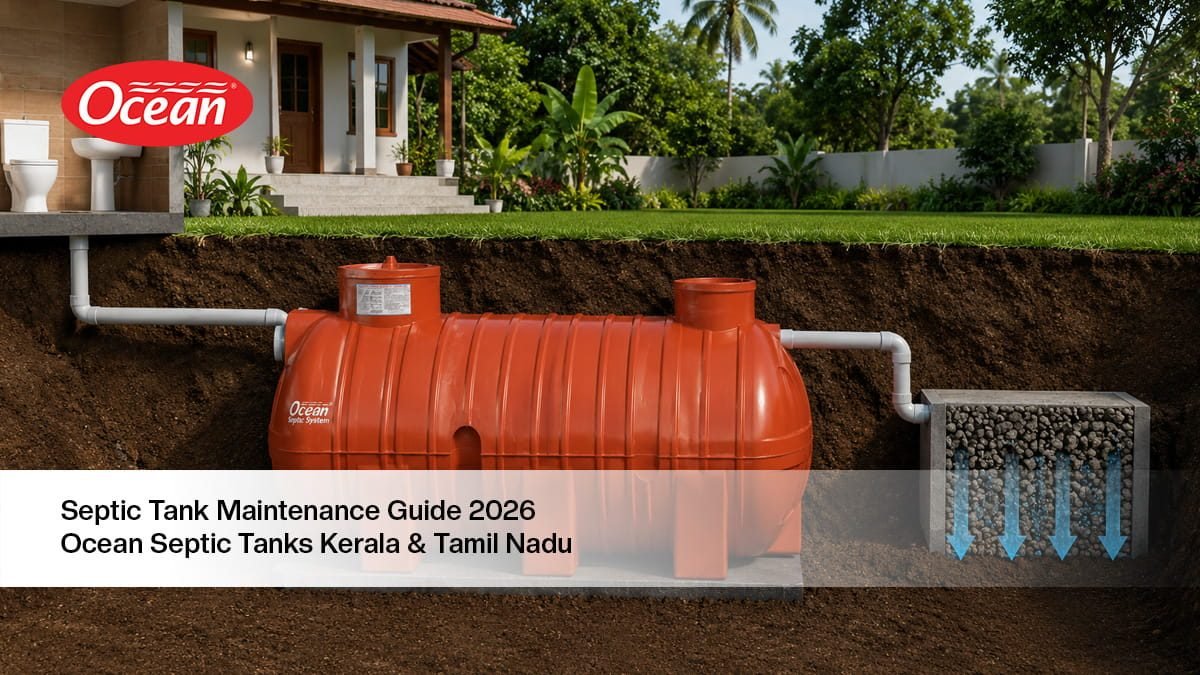
A septic tank is an underground wastewater treatment system that collects water from toilets, bathrooms, and kitchens. Inside the tank, solid waste settles at the bottom, oils float to the top, and partially treated water flows out into a drainage area.
This natural process depends on proper tank design and regular maintenance to function effectively.
Why Regular Maintenance Matters
Keeping a septic system in good condition is not just about avoiding inconvenience. It directly impacts hygiene, safety, and long-term savings.
Proper maintenance helps:
- Prevent sewage backflow into the home
- Reduce foul smells around the property
- Extend the lifespan of the system
- Avoid costly emergency repairs
- Protect groundwater from contamination
In regions like Kerala and Tamil Nadu, where heavy rainfall can affect soil absorption, maintenance becomes even more important.
Ocean Septic Tanks: A Stronger and Safer Solution
Not all septic systems perform the same way. The quality of the tank itself plays a major role in long-term reliability.
Ocean Septic Tanks are designed for durability and high performance, making them suitable for modern homes in South India. These tanks are built to be completely leak-proof, which helps prevent wastewater from seeping into the surrounding soil and water table. This reduces the risk of E-coli contamination and helps limit mosquito breeding, unlike conventional PVC-based septic systems.
They are available in different capacities to suit various household needs. Larger tanks can store more waste, which means they do not require frequent pumping. Smaller tanks still perform efficiently but should be serviced more regularly to avoid overflow, drainage blockages, and unpleasant odours.
Key Features Include:
- Easy to clean and maintain
- Strong and cost-effective design
- Resistant to changing environmental conditions
- Fully leak-proof structure
This combination of durability and hygiene-focused design makes them a reliable choice for long-term residential use.
Early Warning Signs of Septic Problems
Most septic systems show signs before major issues occur. Paying attention early can prevent serious damage.
Common Indicators Include:
- Slow drainage in sinks or toilets
- Unpleasant smells around bathrooms or outdoor areas
- Water pooling near the drain field
- Gurgling sounds in plumbing lines
- Frequent backups in household drains
If any of these appear, the system should be inspected quickly.
Simple Maintenance Habits Every Homeowner Should Follow
Good habits can significantly extend the life of a septic system.
Regular pumping is important, typically every 3–5 years, depending on usage and tank size. Larger capacity systems may require less frequent pumping, while smaller ones need more regular attention.
Avoid flushing items such as wet wipes, sanitary products, grease, plastics, and harsh chemicals, as they disrupt the natural breakdown process inside the tank.
Managing water usage also helps. Fixing leaks and avoiding unnecessary water load prevents the system from getting overloaded.
The drain field should always be protected. Heavy vehicles should not be parked over it, and large trees should not be planted nearby as roots can damage underground pipes.
Using mild, septic-safe cleaning products helps preserve the natural bacteria needed for waste decomposition.
Seasonal Care in Indian Conditions
Homes in South India experience weather conditions that directly affect septic systems.
During Monsoon Season
It is important to ensure proper drainage around the tank area and avoid waterlogging. Soil erosion near the drain field should also be checked.
During Summer
Odours may increase due to higher bacterial activity, so ventilation and proper system checks become important.
When Professional Help Is Needed
While basic maintenance can be handled by homeowners, certain situations require expert attention.
You Should Contact a Professional If:
- Sewage starts backing up indoors
- The tank has not been serviced for several years
- Structural damage is suspected
- Bad odours persist despite cleaning
Timely intervention helps prevent full system failure.
Common Mistakes to Avoid
Many septic issues are caused by simple but avoidable mistakes.
These include ignoring early warning signs, delaying pumping schedules, using excessive chemical cleaners, overloading the system with water, and poor planning around drainage areas.
Avoiding these mistakes can significantly improve system performance.
Final Thoughts
Septic tank maintenance does not need to be complicated. With regular care and awareness, homeowners can avoid expensive repairs and maintain a clean, healthy living environment.
In regions like Kerala and Tamil Nadu, where environmental conditions can be challenging, choosing a well-designed system such as Ocean Septic Tanks adds an extra layer of reliability. Their leak-proof construction, durability, and reduced contamination risk make them a practical long-term solution when combined with proper maintenance habits.
FAQS
-
How often should a septic tank be cleaned?
Most septic tanks should be cleaned every 3–5 years, depending on household usage and tank capacity.
-
What makes Ocean Septic Tanks different from regular tanks?
They are leak-proof, durable, resistant to environmental conditions, and help reduce contamination risks in surrounding soil and groundwater.
-
Can a septic tank reduce odour problems?
Yes, proper maintenance and good design help prevent blockages and reduce foul smells.
-
What should never go into a septic tank?
Avoid flushing wet wipes, sanitary products, grease, plastics, and harsh chemicals.
-
Do larger septic tanks need less maintenance?
Yes, larger tanks can hold more waste and usually require less frequent pumping compared to smaller units.
Disclaimer
This content is for general informational purposes only and should not be considered a substitute for professional plumbing or engineering advice. Always consult a qualified expert for septic system inspection, installation, or repair.