
Every monsoon, the same story plays out in many Indian homes. The bedroom door swells and refuses to close. The bathroom door starts peeling. And before a special occasion, you are calling the painter again to polish everything that has faded.
It gets tiring, and it adds up. That is why more homeowners are looking for low maintenance doors.
So, what makes a door low maintenance? A low maintenance door resists moisture, termites, and sunlight, so it does not warp, rot, or need regular repainting. Pick the right material and build, and a simple wipe is often all it needs. This guide shows you what to look for.
What Makes a Door Truly Low Maintenance?
A door is low maintenance when it can handle your home’s daily stress without help. Four things decide that: moisture, termites, sunlight, and everyday wear.
Moisture is the biggest troublemaker. Water gets into the material, and the door swells, cracks, or peels. Coastal homes and bathrooms feel this most, but even inland homes face months of monsoon humidity.
Termites come next. Once they settle in, they eat a door from the inside, often before you notice. A material they cannot feed on removes the problem at its source.
Sunlight is slower but just as real. Strong UV rays fade colours and dry out surfaces, especially on main doors and balconies. That is why UV stability matters.
Finally, there is daily wear. Kids, pets, slamming, and scratches all add up. A dense, well-built door shrugs these off. Does your current one?
Key Features to Look For in a Long-Life Door
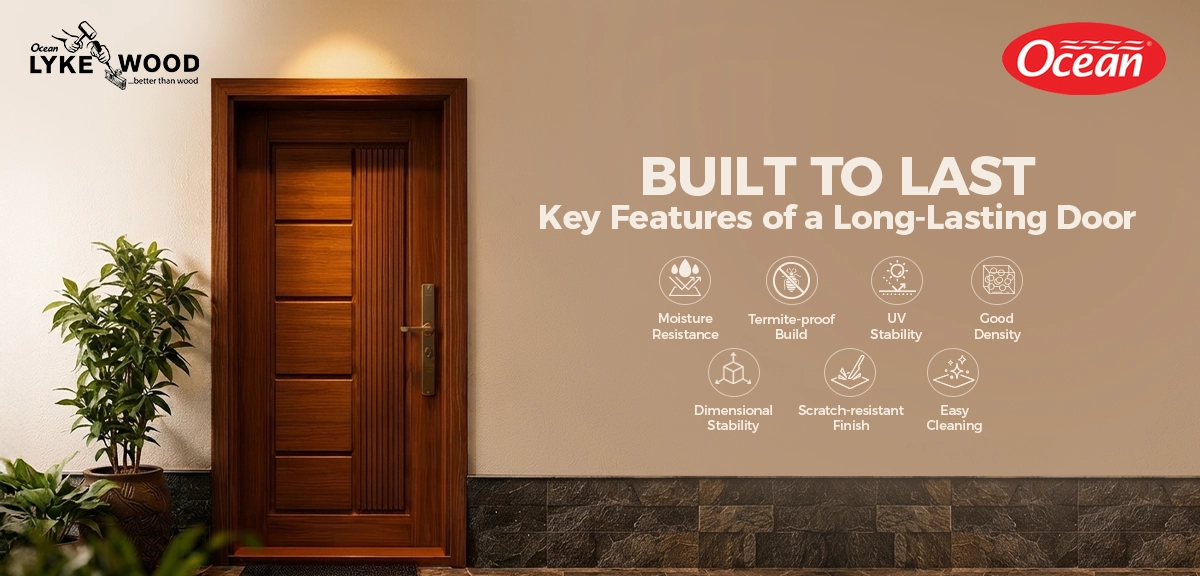
Use this checklist when you compare options. A good long-life door usually ticks most of these boxes:
- Moisture resistance: The material should not soak up water, so it will not swell in the monsoon.
- Termite-proof build: Choose a material termites cannot eat or tunnel through.
- UV stability: The surface should hold its colour under strong Indian sun.
- Good density: A denser door feels solid, holds screws well, and resists dents.
- Dimensional stability: It should not warp or shrink as heat and humidity change.
- Scratch-resistant finish: A tough surface hides daily knocks and needs no polishing.
- Easy cleaning: A damp cloth should be enough to remove everyday dirt.
Why Door Frames Matter as Much as the Door
A great door in a weak frame is a wasted investment. The frame carries the door’s weight and sits right against the wall, so it takes the most punishment. That is why frames often fail first.
Frames near damp floors can rot, termites can hollow them out, and they can twist over time. Then the door stops closing properly, and fixing it may mean breaking into the wall.
This is where eco-friendly door frames are worth a look. WPC (Wood Plastic Composite) frames are durable door frames that resist moisture and termites. They also count as sustainable building materials, since they can reduce the need to cut trees.
Ocean Lykewood offers a complete range of WPC door frames, window frames, window mullions, and window shutters, so it’s easy to find a set that matches.
Quick Guide: Where Low Maintenance Doors Work Best
Every room has its own problem. Match the door to the challenge, and most future headaches disappear.
| Area of Home | Main Challenge | What to Look For |
| Main entrance | Sun, rain, and security | UV-stable, dense, weather-resistant door |
| Bathroom | Constant moisture and steam | Moisture-resistant, rot-free door and frame |
| Kitchen | Heat, oil, and humidity | Easy-wipe finish, stable in heat |
| Bedroom | Daily use and privacy | Smooth fit, scratch-resistant surface |
| Balcony or terrace | Direct sun and rain | UV stability, water resistance, sturdy frame |
| Utility or wash area | Splashes and constant damp | Termite-proof, moisture-resistant door |
| Children’s room | Knocks and scratches | Tough, dense surface and smooth edges |
Simple Care Tips to Keep Doors Looking New
Low maintenance does not mean no maintenance. A few small habits go a long way.
- Wipe regularly: Use a soft damp cloth and mild soap, and skip harsh chemicals or steel wool.
- Check hinges: Tighten loose screws and add a drop of oil to stop squeaks.
- Seal cut edges: If a door is trimmed or drilled, seal the exposed edges as the maker advises.
- Keep the base dry: Do not let water pool at the bottom of bathroom and balcony doors.
- Dust the gaps: Clear grit from frame corners and grooves so it does not scratch the surface.
- Follow the care guide: Cleaning rules differ by product, so read the maker’s instructions.
Things to Check Before You Buy
A little homework now saves regret later. Start with the warranty: read the terms and ask what it covers and for how long. Then ask for test reports or certifications, and verify them instead of taking them at face value. Next, request a sample. Check its weight, edges, and surface finish in your own hands. Finally, ask who will install it, because even a great door fails when it is fitted badly. You can ask Ocean Lykewood or any maker for specifications and samples before you decide.
Ready to Choose Doors You Will Not Have to Worry About?
If you are tired of repainting, polishing, and repairing, it might be time to try something different. Take a look at WPC doors, window frames, and eco-friendly door frames to see what suits your home. Not sure where to begin? Get in touch with the Ocean Lykewood team for friendly guidance. Whether you choose low maintenance doors from us or elsewhere, ask questions, check samples, and pick what you trust.
FAQs
-
What are low maintenance doors?
Low maintenance doors are doors that resist moisture, termites, sunlight, and daily wear, so they need little upkeep. You will not need frequent polishing, repainting, or repairs. A wipe with a damp cloth and an occasional hinge check are usually enough to keep them looking good for years.
-
Can you use low maintenance doors in bathrooms and balconies?
Yes, if the door is made for damp and sunny spots. Bathrooms need moisture-resistant, rot-free doors, and balconies need UV stability along with water resistance. Pair them with a matching durable frame, and check the product specifications for wet-area use before buying.
-
Are WPC doors termite-proof and waterproof?
WPC does not serve as food for termites, so WPC doors are generally termite-proof. They are also designed to resist moisture and water. Still, quality varies between makers, so ask for the specifications and test details, check a sample, and confirm the warranty terms before buying.
-
How long do long-life doors last?
There is no single number, because lifespan depends on the material, quality, installation, and location. A well-made, properly fitted door in a normal home can last many years without major repairs. Ask the maker about the warranty period, and read exactly what it covers.
-
What are eco-friendly door frames, and why choose them?
They use materials that reduce the need to cut trees. WPC frames combine wood fibre and polymer, so they are durable, moisture-resistant, and termite-proof. You get a strong, long-lasting frame and a lighter footprint on the environment, which matters if you care about sustainable building materials.