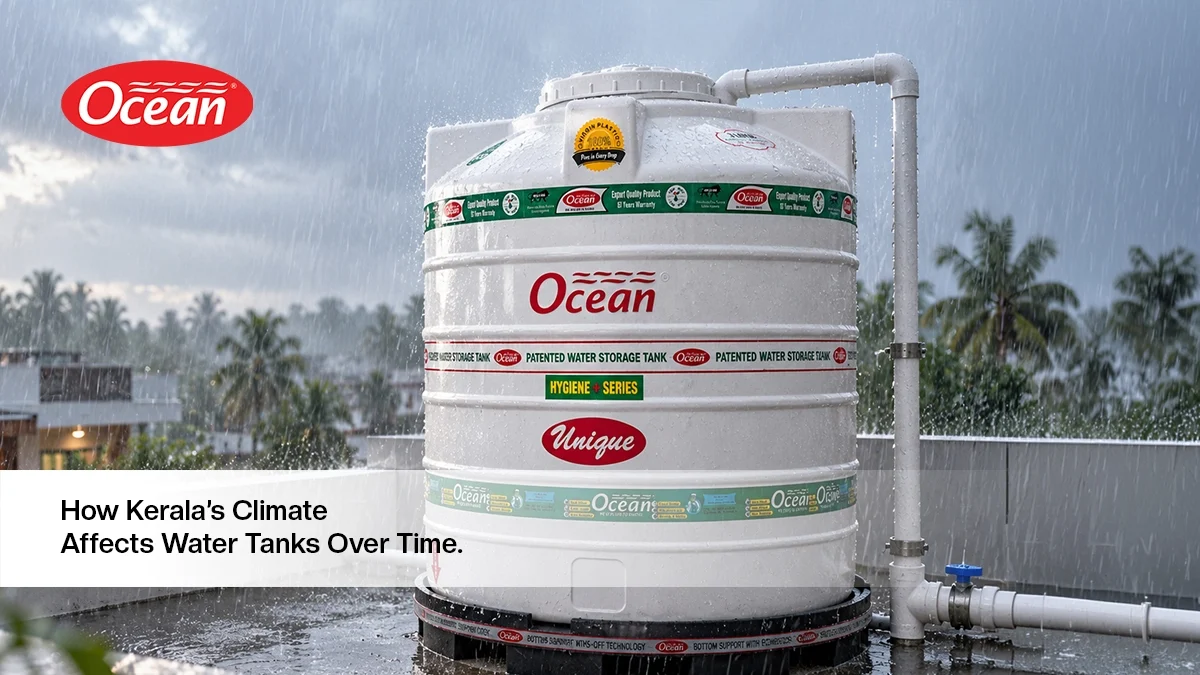
A water tank is expected to store water reliably through changing weather conditions. In Kerala, this means dealing with heavy monsoon rainfall, high humidity, warm temperatures, and periods of strong sunlight. Although a tank may appear unaffected by these conditions at first, prolonged environmental exposure can influence the materials and components used in its construction.
For homes, apartments, commercial buildings, and institutions, choosing a water tank involves more than comparing capacity and price. Material suitability, construction quality, installation conditions, and maintenance all influence how well the tank meets its intended purpose.
Understanding these factors can help buyers make informed decisions when selecting water tanks in Kerala. It also highlights why the specifications of a product matter as much as its appearance.
Why Does Kerala’s Climate Affect Water Tanks?
Outdoor water tanks remain exposed to their surroundings throughout the year. Depending on their location, they may experience direct sunlight, rain, humidity, and changing temperatures.
Kerala receives substantial seasonal rainfall, while humid conditions can persist for extended periods. Between rainy spells, tanks installed on terraces or other exposed locations may receive prolonged sunlight.
These conditions do not affect every tank in the same way. The impact depends on the material, construction, installation, exposure, and maintenance of the individual product.
A tank selected without considering its environment may not be suitable for its intended location. Checking the manufacturer’s specifications before purchasing is therefore an important first step.
How Does Sunlight Affect Water Tanks?
Sunlight contains ultraviolet radiation, which can gradually affect certain materials over time. Depending on the material formulation and construction, prolonged exposure may contribute to surface deterioration or changes in physical properties.
This is particularly relevant for water tanks installed on rooftops, terraces, and other locations where shade is limited.
UV-stabilised materials are designed to improve resistance to ultraviolet exposure. For outdoor water tanks, this can be an important product specification to consider.
However, UV stabilisation should not be treated as a guarantee against every form of deterioration. The product’s formulation, construction, exposure conditions, and maintenance also influence its performance.
What Should Buyers Check?
Before selecting an outdoor water tank, consider:
- Whether the product is intended for outdoor installation
- The material specifications and UV-protection claims
- The manufacturer’s recommendations for installation
- The expected level of sunlight exposure
- The maintenance requirements of the tank
These checks help ensure that the product is suitable for the conditions in which it will be used.
Can Heavy Rain and Humidity Affect a Water Tank?
Rain and humidity are regular features of Kerala’s climate. While a water tank is designed to store water, the surrounding environmental conditions still matter.
Rainfall can expose the exterior of an outdoor tank to repeated moisture. The surrounding installation may also experience water accumulation, debris, and drainage problems during periods of heavy rain.
Humidity creates a persistently moist environment around exposed components and fittings. The tank’s connections, supporting structure, cover, and surrounding plumbing should therefore be inspected periodically.
The practical response is to select a suitable product and ensure that it is installed correctly. A tank’s performance depends on more than its outer surface; the entire installation must meet the requirements of the site.
Why Does Material Quality Matter?
The material used in a water tank influences its suitability for different storage applications and environmental conditions.
For tanks intended to store drinking water, food-grade material suitable for potable-water contact is an important consideration. The specific product should also meet the applicable requirements for its intended use.
For outdoor installations, resistance to sunlight is another relevant factor. UV-stabilised materials may be appropriate where prolonged exposure is expected.
These are separate considerations. Food-grade suitability relates to the intended contact with stored water, while UV stabilisation relates to resistance to ultraviolet exposure.
Neither characteristic alone establishes overall product quality. Buyers should also consider construction, product specifications, installation requirements, and maintenance.
Does Tank Installation Make a Difference?
Even a suitable water tank can experience problems if it is installed incorrectly.
The supporting structure must be appropriate for the filled tank’s weight. The installation surface should be suitable, stable, and level according to the manufacturer’s requirements.
Incorrect positioning, unsuitable support, or poorly fitted connections can create avoidable problems.
For rooftop installations, the building structure and access requirements should be assessed before installation. Underground installations have different requirements relating to the site, surrounding ground, and installation method.
The tank should always be installed according to the manufacturer’s instructions and relevant professional guidance.
How Should You Maintain an Outdoor Water Tank?
Regular maintenance helps identify issues before they become more difficult to address.
Inspect the Exterior
Check for visible cracks, deformation, leakage, or other signs of deterioration. Any unusual changes should be assessed rather than ignored.
Check the Cover
A properly fitted cover helps prevent dust, insects, leaves, and other external debris from entering the tank.
Examine Connections
Inspect accessible inlet, outlet, and overflow connections for leaks, loose fittings, or visible damage.
Clean the Interior
Clean the tank according to a suitable schedule based on water quality, usage, and storage conditions. Follow appropriate cleaning and disinfection procedures.
Check the Installation
Look for changes in the supporting structure, drainage around the tank, or other installation issues that could affect its suitability.
Regular maintenance cannot prevent every form of wear, but it can help identify problems early.
What Role Does Manufacturing Quality Play?
Environmental suitability is only one part of water tank quality. The manufacturing process also matters.
Material specifications, construction, dimensions, finishing, and quality-control practices can influence the characteristics of the finished product.
Ocean Group has more than 27 years of experience in polymer manufacturing and offers water storage solutions for different residential and commercial requirements.
Its water tank range includes overhead, underground, loft, capsule, and vertical sump designs. The company also offers tanks using food-grade materials for relevant applications and UV-stabilised materials for suitable outdoor use.
For customers comparing water tanks in Kerala, these product options provide a starting point for evaluating different storage requirements. The specifications of the individual tank should determine its suitability for a particular installation.
How Do You Choose a Water Tank for Kerala’s Conditions?
The right choice depends on the property’s storage needs and the conditions at the installation site.
Determine the Capacity
Consider the number of users, daily water demand, supply availability, and intended storage duration.
Check Material Suitability
For drinking water storage, confirm that the material is suitable for potable-water contact.
Consider UV Protection
For tanks exposed to direct sunlight, check the manufacturer’s specifications regarding UV stabilisation.
Evaluate the Installation Location
Assess the available space, supporting structure, accessibility, and environmental exposure.
Review Product Information
Check construction, dimensions, applicable certifications, and maintenance recommendations before purchasing.
These factors provide a more practical basis for selection than price alone.
Choosing Water Tanks for Kerala’s Climate
Kerala’s weather makes material suitability and installation conditions important considerations when selecting an outdoor water tank.
Sunlight, rainfall, humidity, construction quality, and maintenance can all influence the long-term suitability of the installation. Buyers should therefore evaluate the tank’s specifications alongside its capacity and design.
Ocean Group’s manufacturing experience and range of water tank configurations provide options for different storage requirements. The final choice should be based on the specific product, its intended use, and the conditions at the installation site.
For households and organisations across Kerala, choosing a suitable water tank begins with understanding what the product needs to withstand.
Frequently Asked Questions
-
How does Kerala’s climate affect water tanks?
Outdoor tanks can experience prolonged sunlight, heavy rainfall, humidity, and changing temperatures. The effect depends on the material, construction, exposure, and maintenance of the tank. Selecting a product suited to its installation conditions can help avoid unsuitable choices.
-
Are UV-stabilised water tanks useful in Kerala?
UV-stabilised materials are designed to improve resistance to ultraviolet radiation from sunlight. They can be useful for tanks installed outdoors, but buyers should verify the specifications and intended use of the particular product.
-
Why is food-grade material important in water tanks?
For drinking water storage, food-grade material suitable for potable-water contact is an important consideration. Buyers should also check applicable specifications and certifications, where relevant, and follow appropriate cleaning and maintenance practices.
-
Does water tank installation affect durability?
Yes. Incorrect support, an unsuitable installation surface, or poorly fitted connections can create problems. The tank should be installed according to the manufacturer’s instructions and the requirements of the site.
-
What should I check before buying a water tank in Kerala?
Consider capacity, material suitability, UV protection for outdoor installations, construction, installation requirements, relevant certifications, and maintenance guidance. The selected tank should meet the storage needs and conditions of the property.