
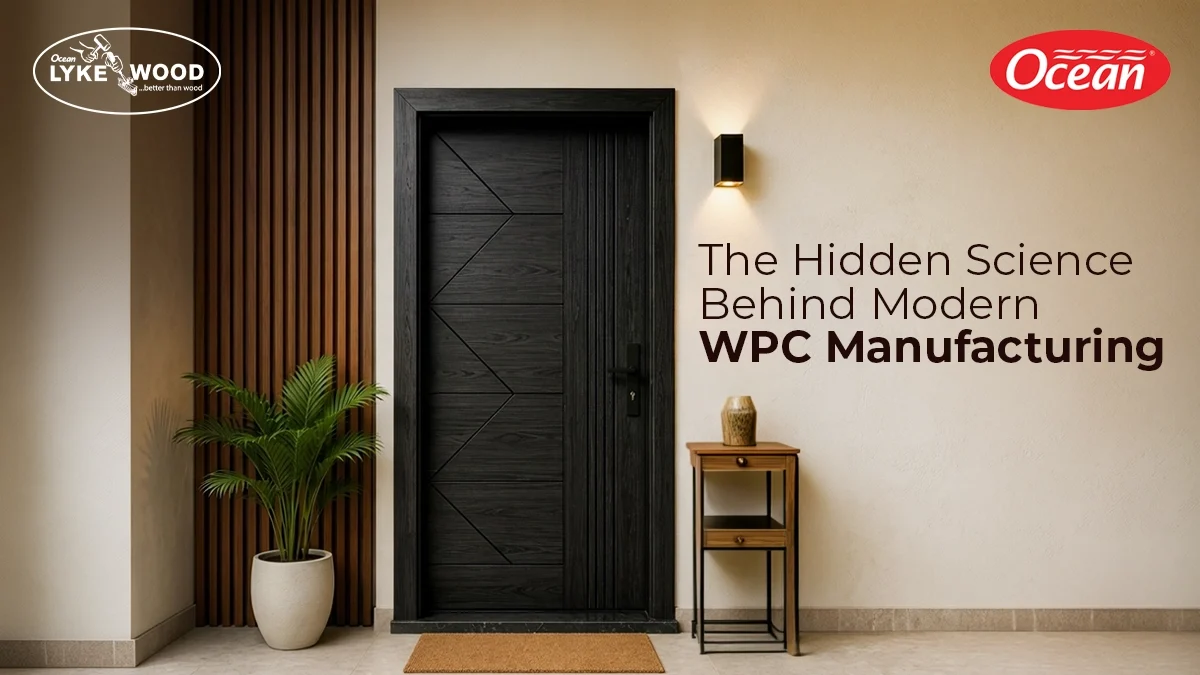
The quality of a WPC product depends on more than its appearance. Material formulation, density, extrusion technology and profile design all influence the characteristics of the finished product. Understanding these factors is important when choosing the best WPC in Kerala, particularly in regions where high humidity and heavy monsoon rainfall affect building materials.
Two WPC products may look similar but differ in their manufacturing methods and material consistency. Exploring the science behind WPC helps homeowners, builders and architects understand what makes a well-manufactured product.
Understanding the Science Behind WPC
Wood Plastic Composite (WPC) is an engineered material made by combining wood-based components, thermoplastic polymers and suitable additives. These ingredients are processed together to create a composite material that can be shaped into different product profiles.
The characteristics of WPC depend on its material formulation. The selection of raw materials, their proportions and processing consistency influence density, surface finish and dimensional stability.
This is why products from different manufacturers may have different characteristics, even when they belong to the same category. The WPC manufacturing process plays an important role in determining the quality and consistency of the final product.
How Direct Extrusion Technology Shapes WPC Door and Window Frames
Direct extrusion technology is an important manufacturing method used in modern WPC door frame and window frame production. It involves processing WPC material through an extrusion machine and shaping it directly into the required frame profiles.
Why Does Direct Extrusion Matter?
The manufacturing approach influences how the final profile is formed. Direct extrusion offers several practical advantages:
- Direct profile formation: The material is shaped into the required door and window frame profiles through an extrusion machine.
- Reduced joining: Multiple-sheet joining is not required to create the basic frame profiles.
- Less additional fabrication: The process can reduce certain cutting, joining and labour requirements.
- Manufacturing consistency: Proper extrusion and material formulation help maintain density, strength and dimensional accuracy.
Profile design is equally important. The dimensions and material distribution must be suitable for the intended application.
Ocean Lykewood manufactures WPC door frames and window frames using direct extrusion technology, focusing on profile formation and manufacturing consistency.
The Engineering Behind WPC Window Shutters
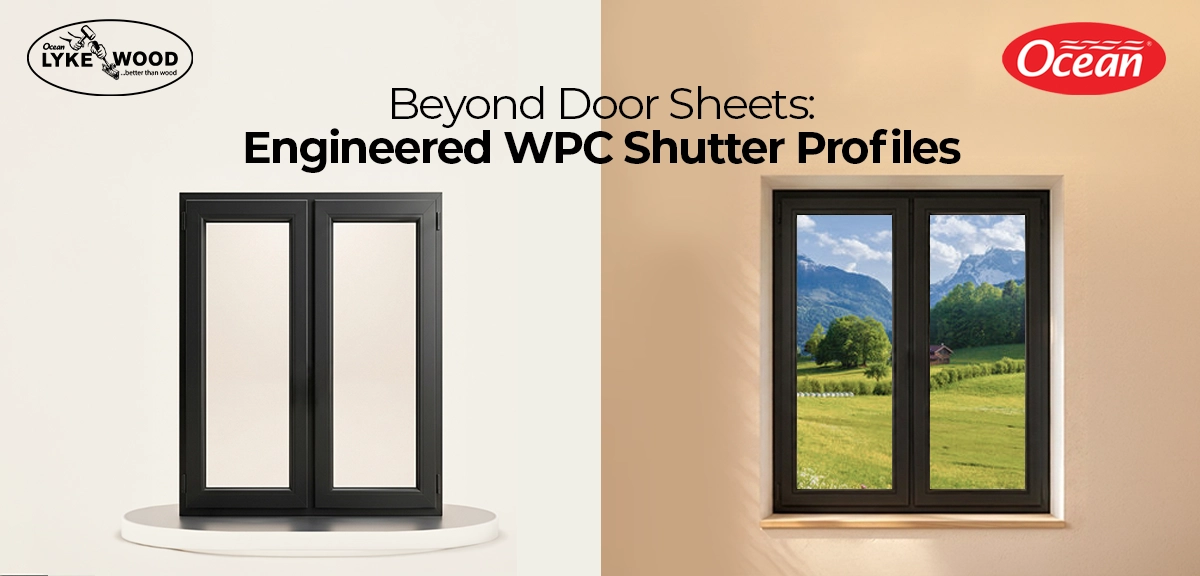
WPC window shutters require specific manufacturing methods and profile designs to meet different installation requirements. While conventional sheet-based methods commonly use WPC door sheets to make window shutters, Ocean Lykewood follows a different approach by manufacturing window shutters using specially designed extruded profiles.
These profiles are developed according to the functional requirements of window shutters rather than relying on door sheets for fabrication.
Ocean Lykewood offers two types of WPC window shutters:.
1. Grooved Model
The grooved model features a specially designed profile with an integrated groove to accommodate 6 mm glass.
The groove is incorporated during profile design, allowing the glass to be fitted into the designated section.
The reported density of this WPC window shutter profile is 1.08 g/cm³ (1,080 kg/m³).
2. Customary Model – Reaper Fixing
The second option is the customary model, in which the window shutter is fixed using a reaper. This provides an alternative to the grooved shutter arrangement and follows a different fixing method.
Both models are manufactured using specially designed WPC profiles, with their respective designs addressing different window shutter requirements.
Why Does Profile Density Matter?
Density refers to the amount of mass contained within a given volume. In WPC manufacturing, it provides useful information about the material and its composition.
Lower-density sheet products may have a greater tendency to bend, depending on their composition, dimensions and design. However, density alone does not determine product quality. Material formulation, profile geometry and manufacturing consistency also influence the finished product.
Why Manufacturing Consistency Matters in WPC Products
Manufacturing consistency helps maintain the intended characteristics of WPC products. Variations in raw materials, formulation and processing can influence the final profile.
Several factors contribute to WPC material quality:
- Material formulation: The combination of wood-based components, polymers and additives influences product characteristics.
- Density consistency: Consistent density helps maintain uniform material properties.
- Extrusion process: Proper processing supports accurate profile formation.
- Profile design: Product-specific engineering determines the shape and functional features.
- Dimensional accuracy: Consistent dimensions are important for fitting and installation.
- Manufacturing control: Consistent processing helps minimise unwanted variations between products.
These factors work together. A WPC product should never be evaluated based on a single specification.
Direct Extrusion vs Sheet-Based WPC Fabrication
Both methods are used in WPC manufacturing, but they differ in how the final product is formed.
| Manufacturing aspect | Direct extrusion | Sheet-based fabrication |
| Profile formation | Formed directly through extrusion | Created by processing sheets |
| May require joining | Not required for the basic profile | May require joining |
| Additional fabrication | Can reduce fabrication requirements | May involve cutting and joining |
| Labour | Can reduce additional labour | Assembly may require additional labour |
| Profile design | Designed profiles can be produced | Depends on sheet dimensions and fabrication |
| Consistency | Depends on formulation and extrusion control | Depends on sheet quality and fabrication accuracy |
Direct extrusion is used in the manufacturing of WPC door frames, window frames and specially designed window shutter profiles, where the composite material is formed into the required shapes.
In conventional sheet-based shutter fabrication, door sheets are commonly used as the starting material. Ocean Lykewood instead uses specially designed extruded profiles for its window shutters. This is an important difference in its manufacturing approach.
Neither method automatically guarantees better performance. The final quality depends on material composition, profile engineering and manufacturing accuracy.
Manufacturing WPC Products for Kerala’s Climate
Kerala experiences high humidity and heavy monsoon rainfall, making material selection an important consideration in construction.
WPC door frames, window frames, shutters and mullions should be developed with their intended applications and local environmental conditions in mind.
Three aspects are particularly important:
- Material selection: The composition of WPC influences its characteristics. Suitable material formulation is important when developing products for humid environments.
- Profile engineering: Door frames, window frames, window shutters and window mullions have different functional requirements. Their profiles should be designed accordingly.
- Manufacturing consistency: Consistent formulation and extrusion help maintain the intended dimensions and material characteristics.
Manufacturing WPC products for Kerala’s climate requires attention to material selection, profile design and product-specific manufacturing requirements.
What Makes a WPC Manufacturer Different?
A manufacturer’s experience in developing WPC products is reflected in its understanding of material processing, profile design and production methods. These factors influence how different products are engineered and manufactured.
Ocean Lykewood was Kerala’s first manufacturer of WPC door frames, window frames and shutters. Its manufacturing process uses direct extrusion technology for door and window frames, while window shutters and mullions are produced using specially designed extruded profiles.
The two window shutter options, namely the grooved model and the customary reaper-fixing model, demonstrate how different profile designs can address different installation requirements.
Before selecting a WPC manufacturer in Kerala, buyers should examine:
- Manufacturing technology: Understand how the manufacturer produces each product.
- Profile design: Check whether the product has application-specific engineering.
- Density information: Request product-specific density details.
- Shutter design: Understand the available grooved and customary fixing models.
- Glass groove specifications: Confirm whether the window shutter accommodates the required 6 mm glass.
- Climate suitability: Consider material selection and product design for local conditions.
- Technical specifications: Ask for available dimensions, profile details and supporting product information.
These considerations help customers compare products based on manufacturing characteristics rather than appearance alone.
Beyond the Surface: Understanding WPC Manufacturing
The quality of a WPC product is influenced by its material composition, manufacturing method and profile engineering. Direct extrusion technology enables door and window frames to be formed without multiple-sheet joining. Similarly, specially designed extruded profiles allow window shutters to be manufactured in different models, including the grooved and customary reaper-fixing options.
Understanding these manufacturing details provides a better perspective on the differences between WPC products. Explore Ocean Lykewood to learn more about its WPC door frames, window frames and manufacturing technology.
FAQs
-
What are WPC window shutters made of?
The WPC manufacturing process involves combining wood-based components, thermoplastic polymers and suitable additives to create a composite material. The material is then processed into the required product using manufacturing methods such as extrusion or sheet-based fabrication.
-
How does direct extrusion technology improve WPC door and window frame manufacturing?
Direct extrusion shapes WPC material into the required door and window frame profiles without joining multiple sheets. It can reduce additional fabrication and labour requirements. Proper material formulation and extrusion control also help maintain density, strength and dimensional accuracy.
-
3. What are the different types of WPC window shutters offered by Ocean Lykewood?
Ocean Lykewood offers two types of WPC window shutters. The first is a grooved model designed to accommodate 6 mm glass. The second is a customary model in which the shutter is fixed using a reaper. Both are manufactured using specially designed extruded profiles.
-
How are Ocean Lykewood window shutters different from conventional sheet-based shutters?
Conventional sheet-based window shutters commonly use WPC door sheets for fabrication. Ocean Lykewood uses specially designed extruded profiles to manufacture its window shutters. This approach forms the shutter profiles according to their intended design requirements.
-
What should buyers consider when choosing a WPC manufacturer in Kerala?
Buyers should examine manufacturing technology, material formulation, profile design, density information and available technical specifications. For window shutters, they should also understand the available shutter models, glass groove dimensions and fixing methods. Product suitability for Kerala’s humidity and monsoon conditions should also be considered.