
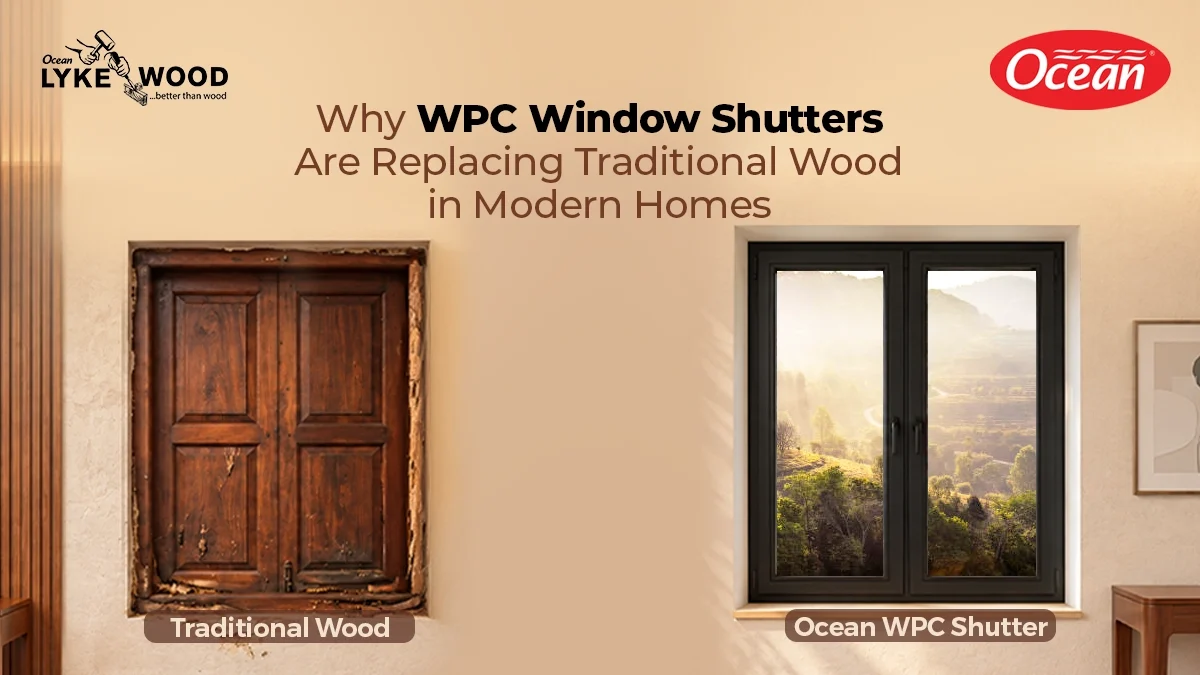
Anyone who has lived near the Kerala coast knows what a monsoon does to wooden windows: the shutters swell, stick, and slowly start to rot. That is why WPC window shutters are getting serious attention from homeowners, builders, and architects across humid regions of India. Wood still looks beautiful, but it requires regular care in damp, termite-prone conditions. WPC offers a different approach, combining a wood-like appearance with a polymer-based material that generally handles moisture better.
In this guide, you will learn what WPC is, where traditional wood falls short, how the two compare, where WPC works best, and how to choose the right product and supplier.
What Are WPC Window Shutters?
WPC window shutters are made from wood polymer composite, an engineered material that combines wood-based content with polymers to provide a timber-like appearance and improved resistance to moisture and pests.
Unlike natural timber, WPC is manufactured, allowing greater control over density, finish, and consistency. This helps quality WPC products maintain their shape more predictably than solid wood when humidity changes.
The same material is used in WPC doors, door frames, and window frames, allowing homeowners to maintain a consistent appearance throughout their property. Manufacturers such as Ocean Lykewood offer WPC solutions for projects where durability, finish consistency, and reduced maintenance are important considerations.
Problems With Traditional Wood Window Shutters
Traditional wood shutters can struggle in humid climates because timber absorbs and releases moisture as environmental conditions change. This movement can cause warping, swelling, cracking, and increased maintenance requirements.
Warping and swelling are common complaints. During the monsoon, wood absorbs moisture and expands, causing shutters to rub against the frame or become difficult to operate. During drier months, the timber may shrink, allowing gaps or cracks to develop.
Termites are another concern, particularly in Kerala and other coastal regions. Untreated or inadequately treated timber can attract termites, and the damage may remain unnoticed until it becomes extensive.
Maintenance also adds to the long-term cost. Wooden shutters often require periodic sanding, polishing, or repainting to preserve their appearance and protective coating. Where water accumulates around sills, joints, or hinges, prolonged exposure can also contribute to wood decay.
Why Homeowners Are Switching to WPC Window Shutters
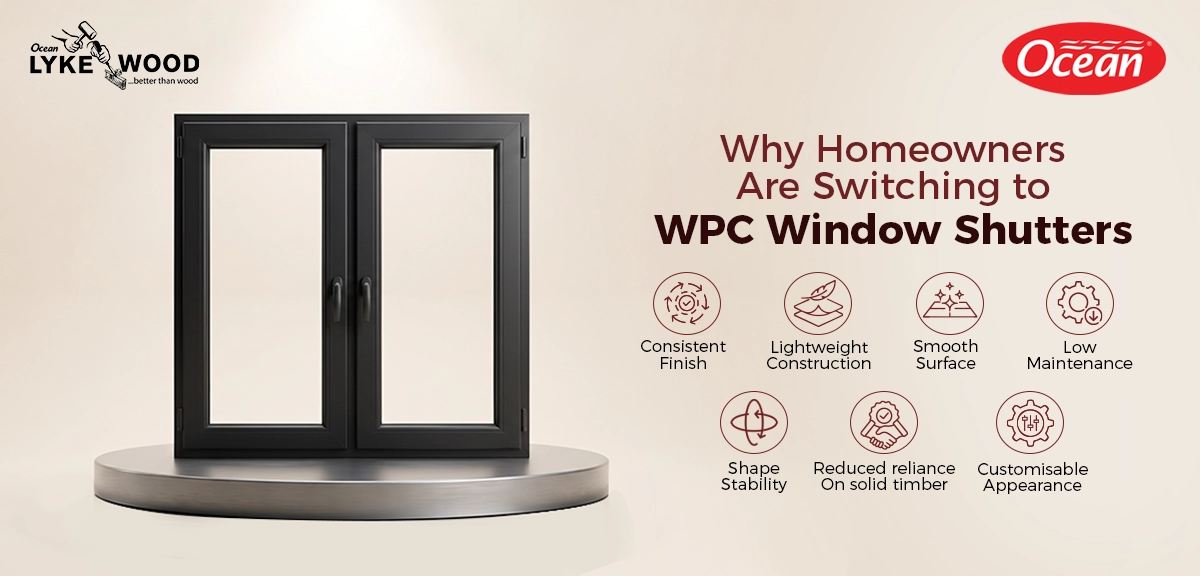
Homeowners are increasingly considering WPC window shutters because quality products generally offer better moisture and termite resistance than conventional untreated wood, along with lower maintenance requirements. They also provide a consistent, wood-like finish.
People searching for waterproof window shutters usually want a solution that performs reliably during the rainy season. Here are some of the advantages WPC can offer:
- Consistent finish: Manufacturing helps maintain a more uniform appearance across multiple shutters, which is useful for larger residential and commercial projects.
- Lightweight construction: Compared with many solid-wood options, WPC shutters can be easier to handle and install, depending on the product design.
- Smooth surface: WPC shutters can provide a smooth, even surface that gives windows a clean and finished appearance.
- Low maintenance: Low-maintenance window shutters typically need routine cleaning rather than the frequent polishing or repainting associated with many wooden products.
- Shape stability: Quality WPC shutters are generally less prone to moisture-related swelling and warping than conventional timber, helping maintain smooth operation when properly installed.
- Reduced reliance on solid timber: WPC can reduce the need for solid wood in certain applications. However, its overall environmental impact depends on the materials used, manufacturing process, and product lifespan.
- Customisable appearance: WPC shutters can be designed to complement different interior styles, allowing them to blend easily with the overall look of a space.
These benefits make WPC worth considering for homes exposed to seasonal rainfall and high humidity. Ocean Lykewood is one option homeowners and builders can evaluate when comparing WPC products, available finishes, and suitability for their window requirements.
Where WPC Works Best
WPC is particularly useful in applications where moisture exposure, pest resistance, and maintenance are important considerations. As an alternative to conventional timber, it can suit several residential and commercial settings.
- Homes and apartments: WPC shutters can provide a wood-like appearance with reduced routine maintenance, making them worth considering for modern homes.
- Coastal and humid areas: In regions experiencing heavy monsoon rainfall and high humidity, suitable WPC products can help reduce moisture-related problems associated with conventional timber.
- Commercial and hospitality projects: Offices, hotels, and resorts may benefit from consistent finishes across multiple window openings and reduced routine maintenance.
- Renovation and replacement projects: WPC may be suitable when replacing old wooden shutters that have developed swelling, warping, or recurring maintenance issues.
The right choice still depends on the product specification, exposure conditions, window design, and installation quality.
How to Choose the Right WPC Product and Supplier
A reliable WPC supplier should provide consistent product quality, compatible frames and shutters, installation guidance, and clearly documented warranty terms.
Start by checking the finish. Examine the edges, surface texture, and colour consistency across several samples rather than relying on a single display piece. Consistency becomes especially important when fitting out an entire home or commercial project.
Next, check compatibility. Shutters, frames, and hardware should be designed to work together. Ask whether the WPC window frames and shutters are compatible with the selected fittings and installation system. Poorly matched components can lead to gaps, alignment issues, and difficulty operating the windows.
Finally, review installation support and warranty coverage. A good supplier should explain the recommended fitting method, sealing requirements, maintenance instructions, and limitations of the warranty. Request the terms in writing and clarify what is covered before making a purchase.
When comparing suppliers, Ocean Lykewood can be included in your research alongside other WPC manufacturers. Review the available product details, request samples, and confirm that the selected shutters meet your project’s functional and design requirements.
Ready to Move Beyond Warped Wood?
For homes in humid parts of India, WPC window shutters offer a practical alternative to conventional timber, particularly where moisture-related swelling, termite damage, and repeated refinishing are concerns.
Before choosing a product, compare material specifications, inspect samples, and make sure the shutters and frames are compatible. A carefully selected product, combined with proper installation, can help improve long-term performance and reduce maintenance requirements.
FAQs
-
What are WPC window shutters made of?
WPC window shutters are made from wood polymer composite, a manufactured material that blends wood-based content with polymers. This combination aims to keep a natural wood look while improving resistance to moisture and pests. Exact composition varies by manufacturer, so ask your supplier for product details before you buy.
-
Are WPC window shutters better than wooden shutters?
For humid, termite-prone climates, WPC is generally the better choice because it resists moisture, pests, and warping more reliably than conventional wood. Solid wood still wins on natural grain and traditional character. The better option depends on your climate, budget, and how much upkeep you are willing to do.
-
Are WPC window shutters termite and water resistant?
WPC is generally resistant to both water and termites, since polymer-based material does not absorb moisture or feed pests the way timber does. Resistance levels depend on the specific product and its quality, so ask the manufacturer what the product is designed to handle and how it should be installed and sealed.
-
Do WPC window shutters need regular maintenance?
WPC window shutters generally need far less maintenance than wood. They typically do not require regular polishing or repainting, and routine cleaning with a soft cloth and mild soap is usually enough. Check the manufacturer’s care guidelines, as recommendations can vary by product and finish.
-
Can WPC window shutters be used in both interior and exterior areas?
Yes. WPC is generally suitable for both interior and exterior use, including rooms, balconies, and façades. For exposed locations, confirm that the specific product is intended for outdoor conditions, and follow the manufacturer’s installation guidance for sealing and fitting.