
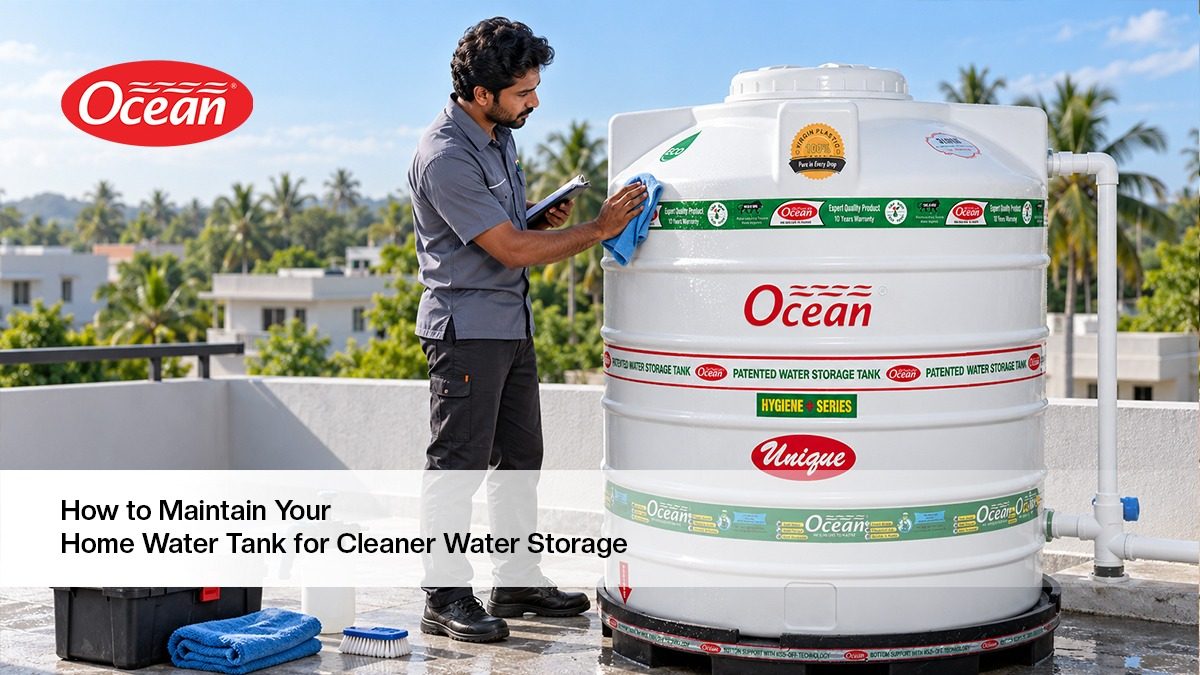
A home water tank supports many everyday activities, from drinking and cooking to bathing, washing, and cleaning. Yet, because it usually operates in the background, its maintenance can easily be overlooked.
Over time, sediment, dust, and other unwanted material may accumulate inside a tank. The condition of the cover, inlet, outlet, and surrounding installation can also influence how well the stored water is protected.
Regular inspection and cleaning are therefore important parts of household water management. For homes across Kerala and Tamil Nadu, where outdoor water tanks may experience heat, humidity, rainfall, and sunlight, maintenance should be treated as a routine responsibility rather than an occasional task.
Understanding how to care for a water tank can help homeowners maintain a cleaner storage environment and identify problems before they become more serious.
Why Does a Home Water Tank Need Regular Maintenance?
Water entering a storage tank may contain small amounts of sediment or suspended particles. Even when the incoming supply appears clear, some material can settle at the bottom over time.
A properly covered tank helps prevent external debris from entering, but it still requires periodic inspection. Damaged covers, poorly fitted openings, and neglected connections can create opportunities for unwanted material to enter the storage system.
Regular maintenance helps identify these issues and allows the tank to be cleaned when necessary.
It is important to remember that a clean-looking tank does not automatically guarantee safe drinking water. Water quality also depends on the source, treatment, distribution system, and condition of the wider plumbing network.
How Often Should You Clean a Water Tank?
For many households, cleaning a domestic water tank every three to six months can serve as a practical starting point. However, the appropriate frequency depends on the quality of incoming water, storage conditions, tank usage, and local requirements.
A tank may need earlier cleaning if there is visible sediment, debris, unusual odour, or evidence of contamination.
Consider the following factors when planning maintenance:
- The quality and source of incoming water
- The amount of sediment entering the tank
- The number of people using the stored water
- Whether the tank is installed overhead or underground
- The condition of the cover and openings
- The surrounding environment and installation conditions
Instead of relying only on a fixed calendar, combine scheduled cleaning with periodic inspection.
What Are the Signs That a Water Tank Needs Attention?
A few visible changes can indicate that the tank or water system requires inspection.
Sediment or Deposits
Material collecting at the bottom of the tank can indicate that cleaning is required. The amount and type of sediment may depend on the incoming supply.
Unusual Smell or Appearance
A change in the smell, colour, or appearance of stored water should be investigated. The cause may lie in the tank, the incoming water, or another part of the plumbing system.
Green Growth or Slime
Visible biological growth can indicate that conditions inside the tank need attention. Light exposure, contamination, and inadequate maintenance may contribute to the problem.
Damaged Cover
A cracked, loose, or poorly fitted cover can allow dust, insects, leaves, and other debris to enter.
Leaks or Structural Damage
Visible cracks, persistent leakage, deformation, or damaged connections should be inspected promptly. Cleaning alone will not resolve structural problems.
If the water is suspected of contamination, avoid assuming that cleaning the tank alone will make it safe to drink. The source of the problem should be identified, and appropriate water-quality advice should be followed.
How Should You Clean a Water Tank?
Water tank cleaning should follow a systematic process. For larger tanks, difficult installations, or shared storage systems, professional assistance may be appropriate.
Step 1: Isolate the Supply
Turn off the incoming water supply and ensure the tank can be accessed safely. Avoid climbing onto unstable structures or entering confined spaces without appropriate precautions.
Step 2: Drain the Tank
Remove the stored water using a suitable method. Do not allow contaminated water or cleaning residues to enter the potable-water supply.
Step 3: Remove Sediment and Debris
Remove accumulated deposits from the bottom of the tank. Use a cleaning method and equipment suitable for the tank material.
Step 4: Clean the Internal Surfaces
Clean the internal surfaces using appropriate materials and procedures. Avoid harsh chemicals or abrasive tools that could damage the tank or leave unsuitable residues.
Step 5: Rinse and Disinfect Where Required
Rinse thoroughly to remove loosened dirt and cleaning residues. Where disinfection is required, use a suitable method and follow the relevant instructions carefully.
Step 6: Refill and Inspect
Refill the tank with a clean supply after completing the appropriate cleaning and disinfection procedure. Check the cover, connections, and surrounding installation before returning the system to normal use.
Does Water Tank Material Affect Maintenance?
The material and construction of a tank influence its suitability for the intended application, but they do not remove the need for cleaning.
For drinking water storage, food-grade material suitable for potable-water contact is an important consideration. Buyers should also check relevant product specifications, certifications where applicable, and the manufacturer’s maintenance recommendations.
A properly fitted cover helps limit the entry of external debris. Suitable construction and accessible maintenance points can also make inspection and cleaning more practical.
For outdoor installations, UV-stabilised materials can be useful because they are designed to improve resistance to prolonged exposure to sunlight.
These characteristics address different aspects of product suitability. Food-grade suitability relates to the intended water-contact application, UV stabilisation relates to sunlight exposure, and construction quality influences the finished tank’s physical performance.
None of these features replaces regular cleaning or guarantees the microbiological safety of stored water.
How Do Kerala and Tamil Nadu Conditions Affect Water Tank Care?
In Kerala, seasonal rainfall, high humidity, and warm conditions can influence the environment around outdoor water tanks. Heavy rainfall may also introduce surrounding debris if openings and covers are not properly maintained.
In Tamil Nadu, prolonged hot weather and seasonal changes can place different demands on outdoor installations.
These conditions make periodic inspection particularly useful. However, the maintenance schedule should reflect the actual storage conditions rather than assuming every tank requires identical treatment.
Homeowners should pay attention to the tank cover, visible connections, inlet and overflow points, and the area surrounding the installation.
How Can You Keep Your Water Tank Cleaner for Longer?
A few simple practices can help reduce avoidable contamination and make routine maintenance easier.
Keep the Cover Secure
Check that the lid fits properly and remains in good condition. Replace damaged covers when necessary.
Inspect Openings and Connections
Check accessible inlet, outlet, and overflow points for visible damage, gaps, or blockages.
Keep the Surrounding Area Clean
Remove leaves, accumulated debris, and other material from the area around an outdoor tank.
Schedule Inspections
Inspect the tank periodically and arrange cleaning according to its condition, water quality, and usage.
Address Problems Early
Investigate changes in water appearance, unusual odours, visible damage, or persistent leaks instead of postponing maintenance.
Why Does Water Tank Manufacturing Quality Matter?
A water tank is expected to provide dependable storage over an extended period. Its suitability depends on more than capacity or appearance.
Material specifications, construction, cover design, fittings, installation requirements, and environmental exposure all deserve consideration.
Ocean Group has more than 27 years of experience in polymer manufacturing, with a product range that includes overhead, underground, loft, capsule, and vertical sump tanks for different residential and commercial requirements.
The company also offers water storage solutions using food-grade materials for relevant applications and UV-stabilised materials for suitable outdoor uses.
For buyers, the important step is to match the specific tank to the installation and intended use. Product specifications, applicable certifications, maintenance guidance, and installation requirements should be checked before making a selection.
When Should You Consider Replacing a Water Tank?
Cleaning and maintenance can help keep a tank in usable condition, but they cannot resolve every problem.
Replacement may need to be considered when the tank develops significant cracks, persistent leaks, severe deformation, or other structural deterioration.
Repeated repairs, difficulty maintaining the tank, or changes in its suitability for the intended application may also justify a professional assessment.
Before replacing a tank, review its capacity, location, material, construction, potable-water suitability, and exposure to sunlight.
Building a Better Water Tank Maintenance Routine
A dependable water storage system needs both a suitable tank and consistent maintenance.
For many homes, a cleaning schedule of three to six months provides a useful starting point, supported by regular inspections and earlier cleaning whenever conditions require it. The exact schedule should be adjusted according to water quality, tank condition, and applicable guidance.
Ocean Group’s experience in polymer manufacturing and water storage solutions provides a relevant starting point for homeowners comparing tank options. The final choice should always reflect the product’s specifications, installation conditions, and maintenance needs.
For households in Kerala, Tamil Nadu, and across South India, taking care of the tank is an important part of taking care of the water stored inside it.
Frequently Asked Questions
-
How often should I clean my home water tank?
For many households, cleaning every three to six months is a practical starting point. The appropriate schedule depends on incoming water quality, tank condition, usage, and local guidance. Clean and inspect the tank sooner if contamination or unusual changes are noticed.
-
What are the signs that my water tank needs cleaning?
Visible sediment, debris, green growth, or changes in water appearance and smell can indicate that inspection is necessary. These signs should be investigated to identify whether the problem originates in the tank or elsewhere in the water system.
-
Are food-grade water tanks suitable for drinking water storage?
Food-grade materials are intended for suitable food-contact applications, but buyers should verify the product’s potable-water suitability and relevant specifications. Safe drinking water also depends on the source, treatment, tank maintenance, and overall plumbing system.
-
Do outdoor water tanks need UV protection?
UV-stabilised materials can improve resistance to prolonged sunlight exposure. Their suitability depends on the specific product and installation conditions. Follow the manufacturer’s guidance when selecting a tank for outdoor use.
-
When should a water tank be replaced instead of cleaned?
Consider professional assessment if the tank develops significant cracks, persistent leakage, deformation, or structural damage. Cleaning cannot correct these problems. Replacement should be based on the tank’s condition, suitability, and repair requirements.