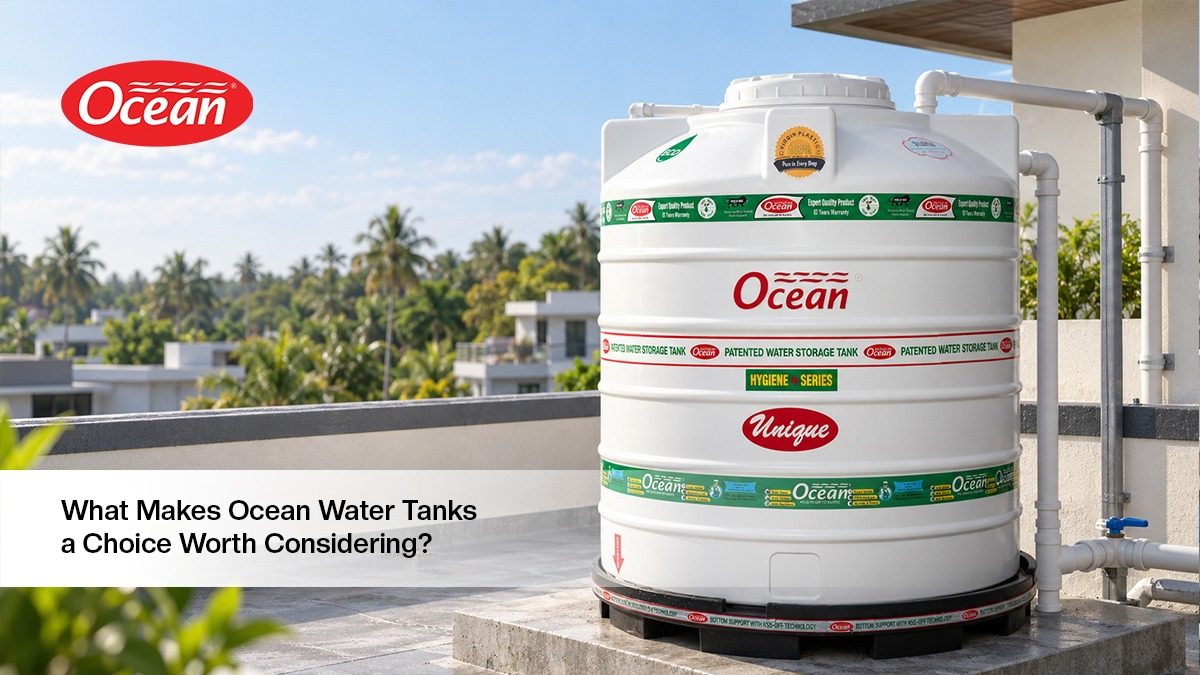
A Water Tank is an important part of any property’s water storage system. It needs to meet the household’s storage requirements, suit the available installation space, and remain appropriate for the conditions in which it will be used.
For homeowners, builders, and commercial property owners, choosing a water tank involves several considerations. Capacity, material, construction, installation requirements, and maintenance all influence the suitability of the product.
Ocean Group has more than 27 years of experience in polymer manufacturing and offers water tanks for different residential and commercial requirements. Understanding the factors that contribute to water tank quality provides a practical way to evaluate the brand’s products and make an informed purchasing decision.
Why Does Manufacturing Experience Matter?
Manufacturing experience provides useful context when evaluating a company that produces polymer products.
Over time, manufacturers develop experience with production processes, material requirements, product specifications, and the practical needs of different applications. This experience can inform product development and manufacturing practices.
However, the number of years a company has operated should not be the only measure of product quality. Buyers should also examine the specifications, construction, intended use, and applicable certifications of the product they are considering.
Ocean Group brings more than 27 years of experience in polymer manufacturing, including water storage solutions.
This experience forms part of the brand’s manufacturing background. The suitability of an individual Ocean water tank should still be assessed against its technical specifications and the requirements of the intended installation.
What Should You Look for in a Water Tank?
A suitable water tank should meet the requirements of the property in which it will be installed.
Rather than choosing a product based on appearance or price alone, consider the following factors:
- Material suitability for the intended water storage application
- Capacity and dimensions
- Construction and product specifications
- Suitability for the installation environment
- Applicable standards and certifications
- Installation and maintenance requirements
These factors provide a more useful basis for comparison than general brand claims.
How Does Material Selection Influence Ocean Water Tanks?
The material used in a water tank influences its suitability for particular storage applications and environmental conditions.
For tanks intended to store drinking water, food-grade material suitable for potable-water contact is an important consideration. Buyers should verify the specifications and applicable requirements of the particular product.
Outdoor installations introduce another consideration: sunlight exposure.
Ultraviolet radiation can gradually affect certain materials. UV-stabilised materials are designed to improve resistance to this exposure, making them relevant for appropriate outdoor applications.
Ocean Group offers water tanks using food-grade materials for relevant applications and UV-stabilised materials for suitable outdoor use.
These characteristics serve different purposes. Food-grade suitability relates to the intended water-contact application, while UV stabilisation relates to resistance to ultraviolet exposure.
Neither feature alone establishes overall product quality. Construction, installation, maintenance, and the manufacturer’s specifications must also be considered.
Why Does Water Tank Construction Matter?
A water tank must be suitable for its intended capacity, installation location, and expected use.
Its construction, dimensions, cover arrangement, fittings, and overall design are relevant when comparing products.
For example, a tank installed on a rooftop may experience prolonged sunlight, while an underground installation has different site and access requirements. A tank intended for a compact space may also need a different configuration from one used in a larger commercial property.
The product should be selected according to the installation requirements rather than appearance alone.
Buyers should review the manufacturer’s specifications and ensure that the supporting structure, connections, and installation method are appropriate for the chosen tank.
What Water Tank Designs Does Ocean Group Offer?
Different properties require different storage arrangements. Ocean Group offers several water tank configurations to accommodate different installation requirements.
Overhead Water Tanks
Overhead tanks may suit residential and commercial buildings where water is stored above the point of use or within an overhead distribution system.
The required capacity, supporting structure, and connection arrangement should guide selection.
Underground Water Tanks
Underground tanks may suit installations where storage is designed to be located below ground level.
Site conditions, accessibility, and the manufacturer’s installation requirements should be assessed before choosing this configuration.
Loft Water Tanks
Loft tanks may be appropriate for installations where available space and dimensions influence the selection.
The tank’s dimensions, capacity, supporting structure, and maintenance access should be considered together.
Capsule Water Tanks
Capsule designs provide another option for installations where the available space influences the tank’s shape and positioning.
Buyers should compare the product’s dimensions, capacity, and intended application before making a decision.
Vertical Sump Tanks
Vertical sump designs may suit particular storage arrangements where the available footprint and required capacity influence the choice.
The manufacturer’s specifications and installation guidance should determine whether the design is appropriate for the property.
The availability of different configurations allows customers to compare options according to their storage requirements rather than treating every installation as identical.
How Should You Choose the Right Capacity?
The correct water tank capacity depends on how the stored water will be used.
A household’s requirements may differ from those of an apartment building, institution, or commercial establishment.
Consider the Number of Users
The number of people using the stored water influences the overall requirement.
Estimate Daily Demand
Consider water used for drinking, cooking, bathing, cleaning, and other activities.
Assess Supply Availability
Properties with intermittent water supply may have different storage needs from those with a more regular supply.
Check Available Space
The tank must fit the installation area while meeting the manufacturer’s requirements for support, positioning, and access.
Consider the Wider Water System
The selected capacity should work with the property’s pumps, pipelines, fittings, and distribution arrangements.
A larger tank is not automatically the better option. The aim is to select a capacity that meets actual demand and suits the installation.
How Does Manufacturing Quality Influence Product Selection?
Material suitability is only one part of a water tank’s overall quality.
Manufacturing consistency, construction, dimensions, finishing, and quality-control practices can influence the characteristics of the finished product.
Buyers should review the product’s technical information and look for relevant quality documentation. Where standards or certifications apply, the specific product should be checked against the requirements for its intended use.
Ocean Group’s more than 27 years of polymer manufacturing experience provides context for its water storage product range.
However, manufacturing experience should be considered alongside the specifications of the individual tank. Product documentation and suitability for the intended application remain essential to the purchasing decision.
Are Ocean Water Tanks Suitable for Kerala’s Climate?
Kerala experiences substantial seasonal rainfall, high humidity, and periods of strong sunlight. Outdoor water tanks may therefore face different environmental conditions throughout the year.
For installations exposed to sunlight, UV stabilisation is a relevant specification to check. For drinking water storage, food-grade material suitable for potable-water contact is also important.
The tank’s construction, capacity, and installation requirements should match the property and its intended use.
Ocean Group offers water tanks with specifications intended for relevant storage applications, including food-grade materials and UV-stabilised materials for suitable uses.
Customers should confirm the exact specifications of the tank they plan to purchase rather than assume that every model has identical features.
Does Maintenance Matter After Purchase?
Even a suitable water tank requires regular inspection and cleaning.
Sediment and debris can accumulate over time, while damaged covers or poorly maintained connections may allow unwanted material to enter the storage system.
Homeowners should inspect the tank periodically for visible damage, leakage, loose connections, and problems with the cover. Cleaning should follow a suitable schedule based on incoming water quality, usage, storage conditions, and applicable guidance.
For many households, cleaning every three to six months is a practical starting point, although individual requirements may differ.
Correct installation and regular maintenance are important parts of using any water tank appropriately.
Why Consider Ocean Water Tanks?
Choosing a water tank should involve an assessment of both the manufacturer and the individual product.
Ocean Group brings more than 27 years of experience in polymer manufacturing and offers water tank configurations for different residential and commercial requirements.
Its product range includes overhead, underground, loft, capsule, and vertical sump tanks. The company also offers tanks using food-grade materials for relevant applications and UV-stabilised materials for suitable outdoor use.
For customers comparing water tanks in Kerala, Tamil Nadu, and across South India, these product options provide a starting point for evaluating storage needs.
The final decision should be based on the tank’s material, capacity, construction, specifications, relevant certifications, installation requirements, and maintenance needs.
Making an Informed Water Tank Choice
A water tank should be selected according to the requirements of the property, not simply its price or appearance.
Material suitability, capacity, construction, installation conditions, and maintenance all contribute to the suitability of the finished installation.
Ocean Group’s manufacturing experience and range of water tank configurations provide options for different storage requirements.
For homeowners, builders, and commercial property owners, the practical approach is to identify the installation’s needs first and then compare the available products against those requirements.
A well-informed choice starts with understanding the product and what it is designed to do.
Frequently Asked Questions
-
What should I consider before buying an Ocean water tank?
Consider capacity, material suitability, construction, installation location, dimensions, relevant certifications, and maintenance requirements. The chosen product should meet the property’s storage needs and the manufacturer’s installation recommendations.
-
How much manufacturing experience does Ocean Group have?
Ocean Group has more than 27 years of experience in polymer manufacturing, including water storage solutions. Buyers should consider this background alongside the specifications and suitability of the individual tank.
-
What types of water tanks does Ocean Group offer?
Ocean Group’s water tank range includes overhead, underground, loft, capsule, and vertical sump designs. The appropriate configuration depends on available space, required capacity, installation conditions, and intended use.
-
Why are food-grade materials and UV stabilisation important?
Food-grade material suitable for potable-water contact is important for drinking water storage. UV stabilisation can improve resistance to prolonged sunlight exposure in suitable outdoor applications. These characteristics address different requirements, and buyers should verify the specifications of the selected product.
-
How can I maintain an Ocean water tank?
Inspect the tank periodically for visible damage, leaks, damaged covers, and connection problems. Clean it according to water quality, usage, storage conditions, and applicable guidance. Follow the manufacturer’s maintenance recommendations for the specific model.