

If you’ve ever had a wooden door swell up during monsoon season, or found termite tunnels behind a frame you thought was solid, you already know the problem. Kerala’s humidity is hard on regular wood, and it doesn’t matter how expensive the timber was. Moisture and termites don’t care.
It’s a frustration a lot of homeowners here go through more than once. A beautiful wooden door looks great for a year or two, and then the monsoon takes its toll, the door starts sticking, the finish peels, or a routine check turns up termite damage nobody noticed early. Repairing or replacing it all over again gets expensive, and it rarely feels like a one-time fix.
That’s the gap Ocean Lykewood WPC doors and frames are built to fill. They look like wood, they install like wood, but they’re made to handle the two things that damage wood the most: water and pests.
What is WPC, actually?
WPC stands for Wood Plastic Composite. Instead of solid timber, it’s made by combining wood fibres with polymers and a few additives, then pressing the mix into door shutters and frames.
Because it isn’t cut from a tree, it doesn’t have the natural weak points wood has: grain lines that crack, knots that weaken over time, or moisture that seeps in and causes warping. It also doesn’t depend on timber supply, so the material stays consistent from one batch to the next.
These doors come in different colours, textures, and finishes, so they can fit either a traditional Kerala home or a more modern interior.
Why it matters for homes here specifically
Kerala isn’t an easy climate for building materials. Long monsoons, high humidity most of the year, and termite activity that’s common in this region all add up. A few things WPC handles better than regular wood:
Moisture : WPC doesn’t absorb water the way natural wood does, so it holds up in bathrooms, kitchens, and utility areas, places where a wooden door would eventually swell, warp, or stain.
Termites : WPC isn’t a food source for termites, so it removes one of the most common problems with wooden doors in this part of the country. That said, good installation still matters. A well-made door can still develop issues if it’s fitted against a damp or termite-infested wall.
Upkeep : Wooden doors need regular oiling, polishing, and repainting to survive Kerala’s weather. WPC needs far less, normally just a wipe-down with a suitable cleaner.
Shape retention : A well-made WPC door doesn’t expand or contract the way wood does with humidity changes, so it keeps closing and fitting properly for longer. That matters more than it sounds. A door that swells slightly every monsoon and shrinks back every summer puts constant stress on hinges, locks, and the frame itself, and that’s usually where long-term problems start.
Where you can use WPC doors and frames
WPC works across most of the house:
- Bedroom and bathroom doors
- Kitchen and utility area doors
- Living room entrances
- Office and commercial interiors
- Partitions and storage room doors
Because the finish options are flexible, you can keep a consistent look through the whole house rather than mixing materials room to room.
WPC doors and frames vs. traditional wood: the real trade-off
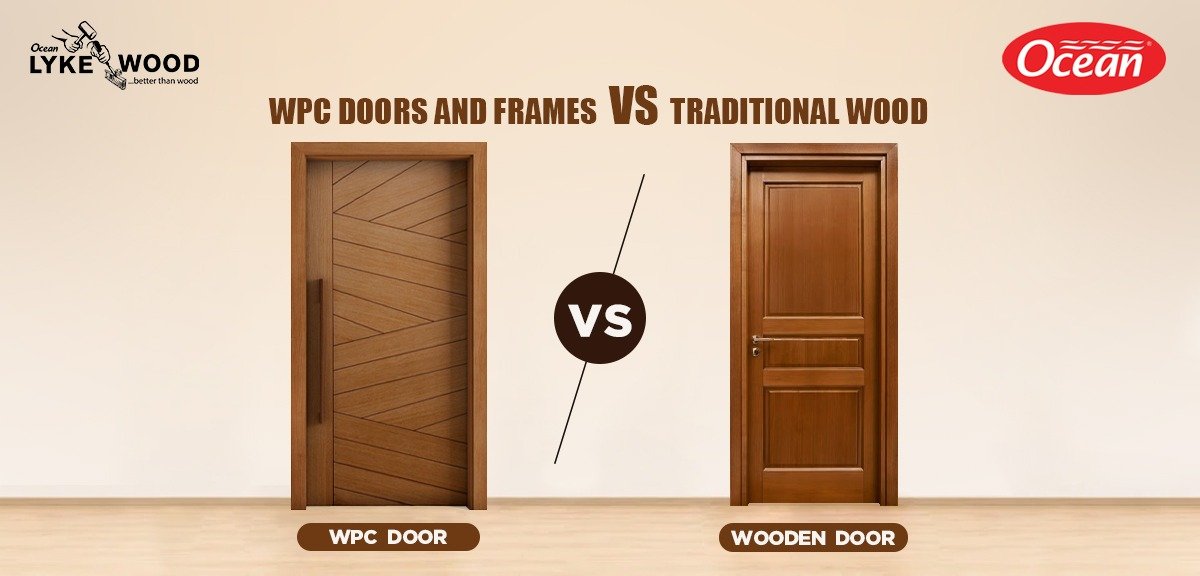
Wood still has a warmth and character that’s hard to fully copy, and plenty of homeowners will always prefer it for that reason alone. But it comes with maintenance: regular refinishing, careful sealing, and ongoing vigilance against termites and moisture, especially in a climate like Kerala’s.
WPC is the trade-off in the other direction. You get a wood-like look with a lot less upkeep and much better resistance to the two things that actually damage doors here. What you’re giving up is the exact texture and grain variation of solid timber. High-quality WPC gets close, but a trained eye can usually tell the difference up close.
Which one makes more sense depends on your priorities. Traditional wood’s moisture resistance depends entirely on the species and how well it’s treated, while WPC resists moisture by nature. Wood needs treatment to keep termites away; WPC resists them built-in. Wood asks for regular oiling and polishing, while WPC mostly just needs occasional cleaning. And on looks, wood ages with natural grain and character that’s hard to replicate, while WPC offers a more consistent, wood-like finish across every piece.
What to check before you buy WPC
Not all WPC products are the same. Quality depends heavily on the manufacturing process. Before choosing a supplier, it’s worth asking:
- What’s it made of? Ask about the composition and manufacturing standard, not just “WPC.”
- Is it right for space? A door for a bathroom and a door for a living room don’t need the same specification.
- Does the finish match your interior? Colour and texture should work with your flooring and furniture, not fight against it.
- Do the door and frame match? Mismatched door-frame combinations cause fitting problems later.
- Who’s installing it? Even a good WPC door will underperform with poor installation.
- Is the manufacturer established? A track record matters, since it usually means more consistent quality and someone to call if something goes wrong.
It’s worth spending a bit of time on these questions upfront. WPC as a category covers a wide range of quality levels, and two products that look identical in a showroom can perform very differently after a few monsoons. A short conversation about composition, finish, and warranty terms is a small effort compared to redoing a door in a few years.
Ready to make the switch?
If moisture and termites have been a recurring headache with wooden doors in your home, you don’t have to keep repeating the same repair cycle every few years. Ocean Lykewood WPC is built specifically for climates like Kerala.
Less maintenance, better resistance to local conditions, and enough design flexibility to suit almost any interior, from a single bathroom door to a full home renovation.
Whether you’re building a new home or replacing doors that just can’t keep up with the weather anymore, it’s worth talking to someone who can walk you through the right specification for your space. Get in touch with the Ocean Lykewood team to check finishes, discuss pricing, and find the right WPC door and frame solution for your home.
FAQs
-
Do WPC doors work well for bathroom and kitchen spaces?
Yes, these are where WPC performs best, since both areas deal with regular moisture that wears down ordinary wooden doors over time.
-
Is professional installation necessary for WPC doors?
Yes. Even a good-quality door can develop fitting or alignment issues if it’s installed poorly, so it’s worth using an experienced installer.
-
Will WPC doors warp or swell in monsoon weather?
No, not the way natural wood does. WPC doesn’t absorb water the same way, so it holds its shape through humid months.
-
Can WPC doors be painted or refinished later?
Most come with a factory finish meant to last, so repainting usually isn’t needed. Check with your supplier first.
-
Where can I use WPC doors and frames?
Bedrooms, bathrooms, kitchens, living rooms, offices, and commercial spaces.