
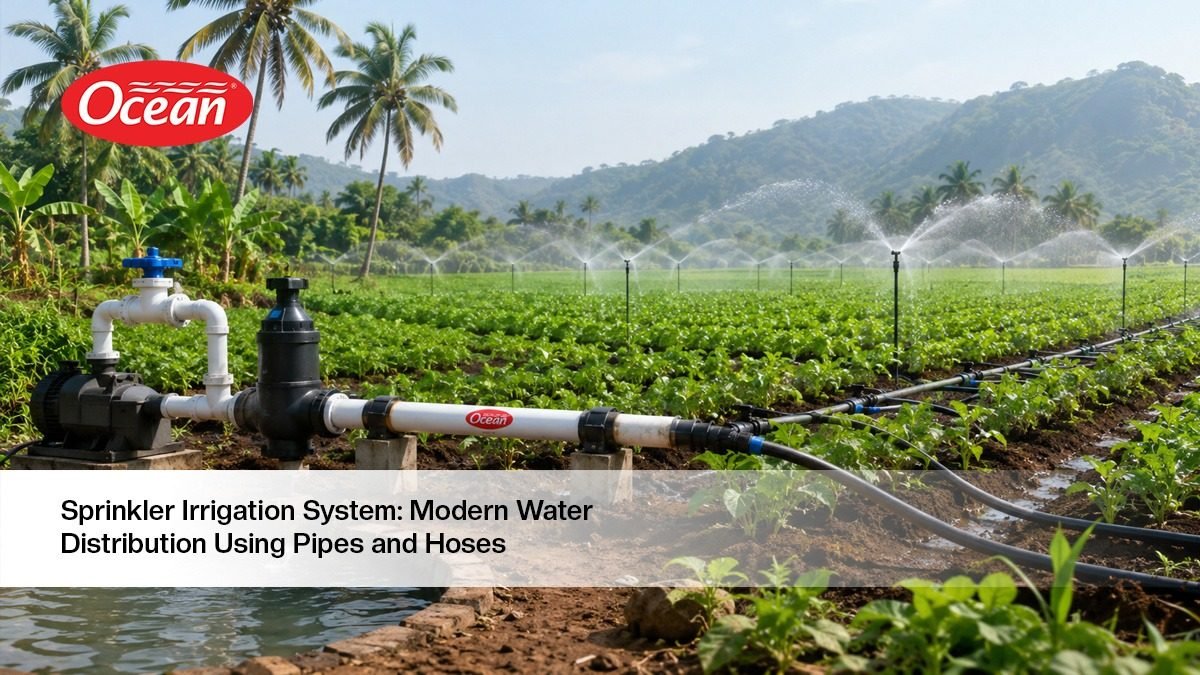
What is a Sprinkler Irrigation System?
A sprinkler irrigation system is a method of watering crops by distributing water in a way that resembles natural rainfall. Water is pumped under pressure and carried through a network of pipes and hoses before being released into the field through sprinkler outlets.
This system is widely used in agriculture, landscaping, and garden irrigation because it ensures uniform water distribution. In regions like Kerala and Tamil Nadu, where farming conditions vary, this method supports efficient water usage and better crop management.
How Sprinkler Irrigation Works
The system operates by pressurising water through a pumping unit and directing it into a network of pipes and hoses. These pipes transport water across the field, where it is released through sprinkler heads as fine droplets.
The process ensures:
- Even water distribution across crops
- Reduced water wastage
- Improved soil moisture balance
Pipes and hoses play a critical role in maintaining steady water flow and ensuring the system performs efficiently in different agricultural environments.
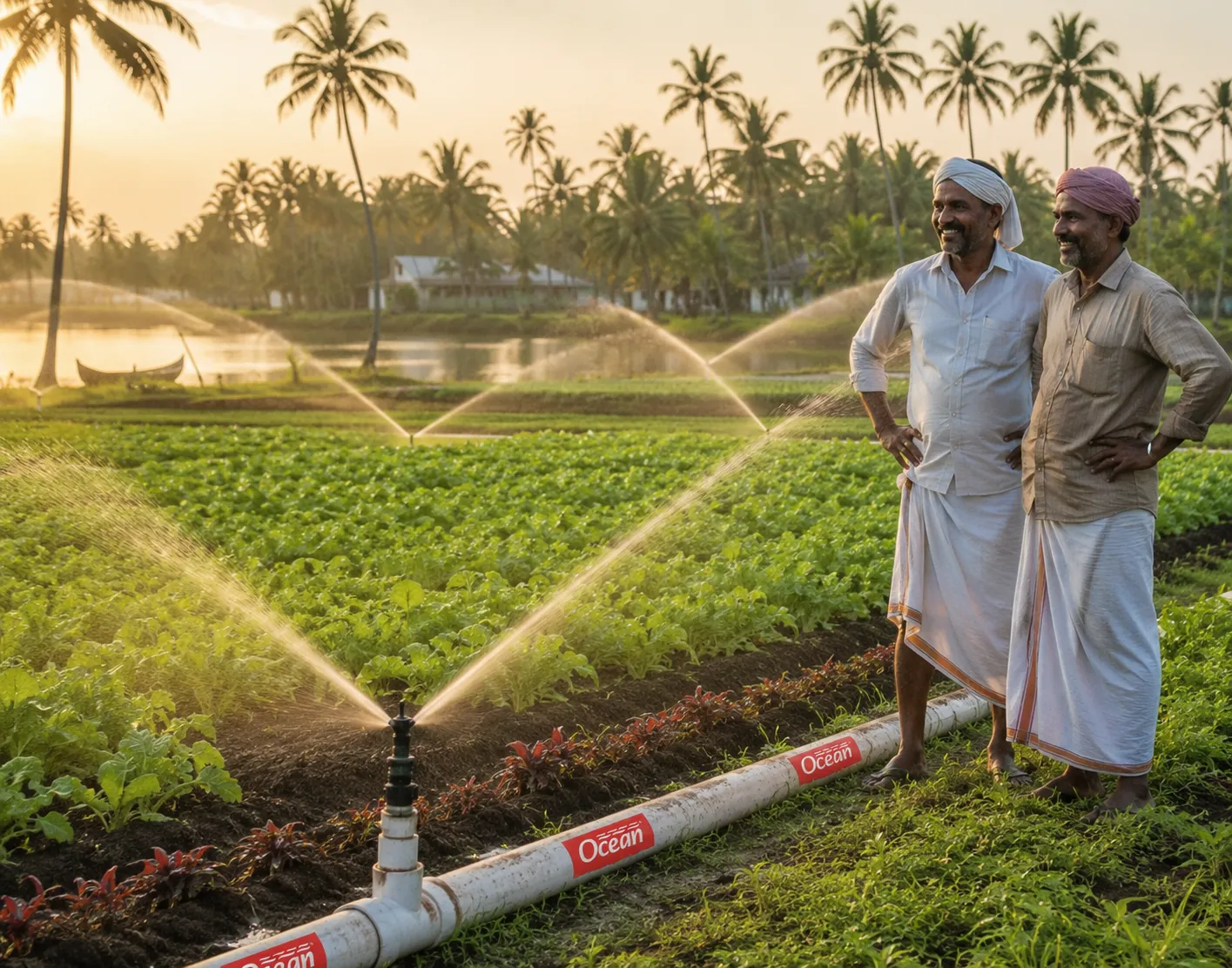
Key Components of a Sprinkler Irrigation Setup
A sprinkler irrigation system depends on multiple interconnected components working together.
Pumping Unit
The pump creates the required pressure to move water from the source into the distribution network.
Pipes and Main Lines
Durable pipes form the backbone of the system. They transport water from the pump to different sections of the field. High-quality materials such as HDPE pipes are commonly preferred due to their strength, flexibility, and resistance to environmental stress.
Hoses and Laterals
Hoses carry water from the main pipeline to specific irrigation zones. Their flexibility makes them ideal for shifting layouts and varying field conditions.
Sprinkler Outlets
These devices break water into fine droplets and distribute it evenly across crops, simulating rainfall.
Fittings and Connectors
Proper fittings ensure leak-proof connections between pipes and hoses, maintaining consistent water pressure throughout the system.
Role of Pipes and Hoses in Irrigation Systems
Pipes and hoses are the foundation of any sprinkler irrigation setup. Their quality directly affects system performance.
In South India, especially Kerala and Tamil Nadu, agricultural fields often require adaptable irrigation systems due to varying terrain and crop types. Strong, flexible piping systems help farmers manage water distribution efficiently across uneven land conditions.
HDPE pipes are widely used because they:
- Offer long service life
- Resist corrosion and weather damage
- Are easy to install and maintain
Hoses add flexibility, allowing farmers to adjust irrigation layouts based on seasonal needs or crop rotation.
Advantages of Sprinkler Irrigation Systems
Sprinkler irrigation offers several practical benefits for modern farming:
- Reduces water consumption significantly
- Suitable for a wide range of soil types
- Improves crop growth and yield
- Reduces manual labour requirements
- Easy to install and relocate
- Supports fertiliser distribution through water flow
- Helps maintain uniform soil moisture
- Useful for both small farms and large agricultural fields
- Minimises land wastage by removing the need for bunds
These advantages make it a preferred irrigation method across agricultural regions in Kerala and Tamil Nadu.
Limitations of Sprinkler Irrigation Systems
Despite its benefits, there are a few challenges to consider:
- Wind can affect spray uniformity
- High temperatures may increase evaporation loss
- Requires a stable water supply and consistent pressure
- Initial setup cost may be higher compared to traditional methods
- Not ideal for areas with very limited water availability
Proper system design and quality piping materials help reduce many of these limitations.
Choosing the Right Irrigation Setup
Selecting an effective irrigation system depends on several factors:
- Type of crops being cultivated
- Land size and terrain conditions
- Availability of water resources
- Budget and maintenance requirements
- Quality of pipes and hoses used
In regions like Kerala and Tamil Nadu, farmers often prefer durable pipe-based irrigation systems that can withstand humid climates and frequent usage.
Importance of Efficient Irrigation in South India
Water management plays a key role in agriculture across South India. Efficient irrigation systems help farmers maximise productivity while conserving water resources.
Sprinkler-based systems supported by reliable pipes and hoses allow better control over water distribution, making farming more sustainable and productive in the long run.
Ocean Group – Reliable Pipes and Hose Solutions
With over 27 years of industry experience, Ocean Group is a trusted name in manufacturing high-quality piping and polymer-based solutions.
The brand focuses on delivering products that meet modern agricultural and infrastructure needs, including:
- Durable piping systems
- Flexible hose solutions
- UV-stabilised and long-lasting materials
- ISI-certified quality standards
- Food-grade and safe material manufacturing
Ocean Group products are designed to support efficient irrigation systems across Kerala, Tamil Nadu, and other parts of South India.
FAQs
-
What is a sprinkler irrigation system?
It is a method of irrigating crops by distributing water through pipes and hoses under pressure, simulating rainfall.
-
What role do pipes and hoses play in irrigation systems?
They transport water from the pump to sprinkler outlets and ensure even distribution across the field.
-
Which pipes are commonly used in irrigation systems?
HDPE pipes are widely used due to their strength, durability, and flexibility.
-
Is sprinkler irrigation suitable for South Indian farming?
Yes, it is highly suitable for Kerala and Tamil Nadu due to its water-saving and adaptable nature.
-
What are the main benefits of sprinkler irrigation?
It saves water, improves crop yield, reduces labour, and ensures uniform irrigation across farmland.