
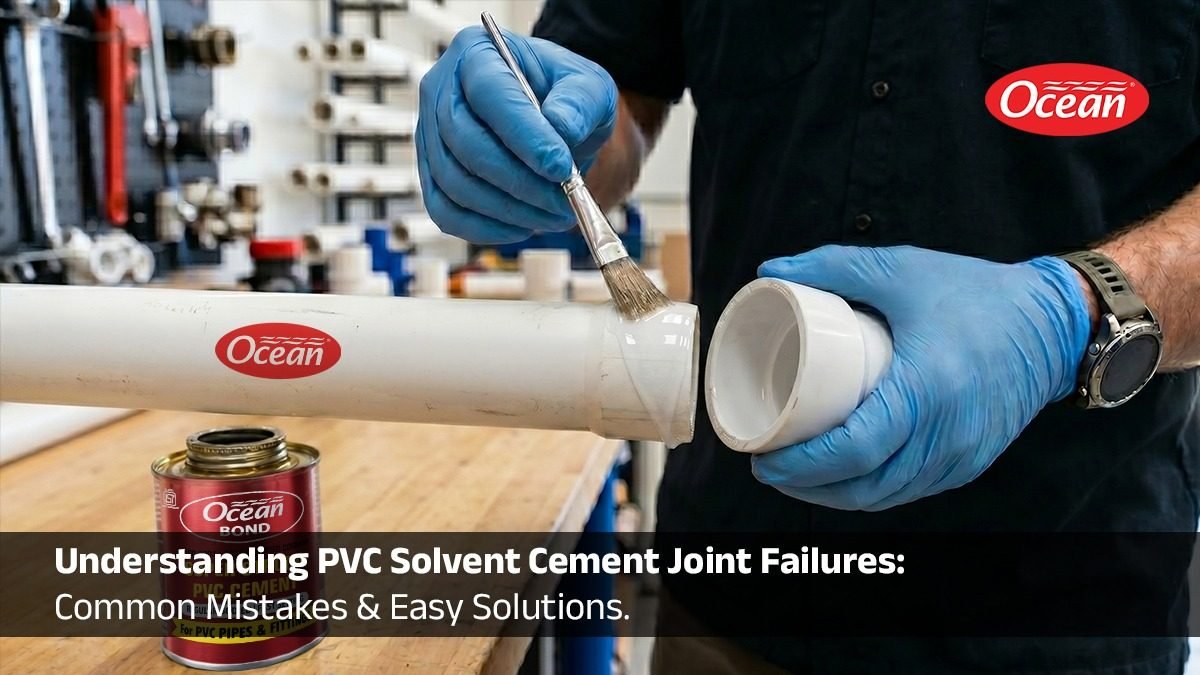
PVC piping is widely used in homes, agriculture, and industries because it’s durable, affordable, and easy to install. However, one small mistake during installation can lead to leaks, weak joints, or even complete system failure.
If you’ve ever dealt with leaking pipes or repeated repairs, the issue often lies in how the solvent cement joint was made. This guide explains the most common mistakes, how to avoid them, and how to ensure long-lasting, leak-free PVC connections using the right techniques and products.
Why Do PVC Solvent Cement Joints Fail?
PVC solvent cement works by softening the pipe and fitting surfaces, allowing them to fuse into one solid joint. When done correctly, the bond is extremely strong.
However, failures usually happen due to:
- Poor surface preparation
- Skipping primer
- Incorrect application of cement
- Misalignment of pipes and fittings
- Not allowing proper curing time
- Using expired or low-quality cement
- Mixing incompatible materials
Even one of these mistakes can weaken the joint and lead to leakage over time.
Surface Preparation Mistakes (The Most Overlooked Step)
Dirty or Wet Surfaces
Dust, oil, or moisture can prevent proper bonding.
What to do instead:
- Clean the pipe and fitting with a dry, lint-free cloth
- Use a PVC cleaner or primer to remove grease
- Ensure surfaces are completely dry before applying cement
Rough or Uneven Pipe Ends
Uneven cuts reduce the contact area, weakening the joint.
Best practice:
- Use a pipe cutter for clean, straight cuts
- Remove burrs using a deburring tool
- Avoid sanding excessively, as it can damage the surface
Mistakes in Applying Solvent Cement
Skipping PVC Primer
Primer softens the surface, improving bonding.
Fix:
- Always use primer for pressure systems
- Follow plumbing guidelines and product instructions
Using Too Little or Too Much Cement
Both can cause problems:
- Too little → weak joints and gaps
- Too much → blockages and uneven bonding
Correct method:
- Apply an even layer on both the pipe and the fitting
- Avoid dripping or pooling
- Wipe off excess cement immediately
Ignoring Instructions
Each solvent cement has specific usage guidelines.
Solution:
- Always follow manufacturer instructions
- Use the right cement for the pipe size and type
- Avoid working in the rain or extreme temperatures
Pipe Alignment & Fitting Errors
Misalignment During Installation
Forcing pipes at an angle creates stress on the joint.
Correct technique:
- Insert the pipe straight into the fitting
- Rotate slightly (¼ turn) for even distribution
- Hold firmly for a few seconds
Incorrect Insertion Depth
Not pushing the pipe fully into the fitting reduces bonding strength.
Tip:
- Mark the insertion depth before applying cement
- Push until the mark is reached
Not Allowing Proper Curing Time
This is one of the biggest causes of joint failure.
Common mistake: Testing or using the pipe too soon
What to do:
- Allow at least 15 minutes for initial setting
- Wait around 2 hours for full curing under normal conditions
- Increase time in cold or humid environments
Using Incompatible Materials
Not all PVC systems are the same.
Avoid this:
- Mixing PVC with CPVC without proper compatibility
- Using the wrong type of solvent cement
Best practice:
- Identify pipe type (e.g., pressure pipes)
- Use a matching solvent cement designed for that material
Practical Tips to Prevent Joint Failures
- Clean and dry surfaces thoroughly
- Use primer where required
- Apply cement evenly on both surfaces
- Insert fully and align properly
- Hold the joint during the initial set
- Allow full curing before use
- Store cement in a cool, dry place
- Check expiry dates before use
How to Fix a Failed PVC Joint
If a joint has already failed, repairing it properly is important.
Step-by-Step Fix:
- Turn off the water supply
- Cut out the damaged section
- Prepare pipe ends and fittings
- Apply primer and solvent cement correctly
- Reassemble with proper alignment
⚠️ Applying cement externally on a leaking joint is only a temporary fix. Replacement is the best long-term solution.
Why Choose Ocean Bond Solvent Cement?
When it comes to reliable joints, using a high-quality product makes all the difference.
Ocean Group brings over 27+ years of manufacturing expertise, offering trusted solutions for plumbing and piping systems across India.
Key Benefits of Ocean Bond Solvent Cement:
- Strong and durable bonding
- Easy to apply for professionals and DIY users
- Suitable for various pipe fitting applications
- Designed for consistent, leak-proof performance
It is specially formulated to ensure proper surface preparation and bonding, helping you avoid common joint failures.
Best Practices for Long-Lasting PVC Joints
- Always follow proper installation techniques
- Use high-quality, standard-compliant solvent cement
- Match the product with the pipe type and size
- Allow sufficient curing time before use
Conclusion
PVC solvent cement joint failures are not random — simple, avoidable mistakes usually cause them. By focusing on proper preparation, correct application, and using trusted products like Ocean Bond Solvent Cement, you can ensure strong, leak-free connections that last for years.
Whether you’re a plumber, contractor, or homeowner, following these best practices will save time, money, and future repairs.
FAQ
-
Why do PVC solvent cement joints fail?
PVC joints usually fail due to poor surface preparation, incorrect cement application, skipping primer, or not allowing enough curing time.
-
How long should PVC solvent cement cure?
Initial setting takes around 15 minutes, but full curing typically requires about 2 hours under normal conditions.
-
Can I fix a leaking PVC joint without cutting it?
Temporary fixes are possible, but the most reliable solution is to cut and replace the damaged joint.
-
Is primer necessary for PVC solvent cement?
Yes, especially for pressure systems. Primer improves bonding strength and ensures long-lasting joints.
-
What is the best solvent cement for PVC pipes in India?
High-quality, reliable products like Ocean Bond Solvent Cement are designed for strong, durable, and leak-proof joints.