
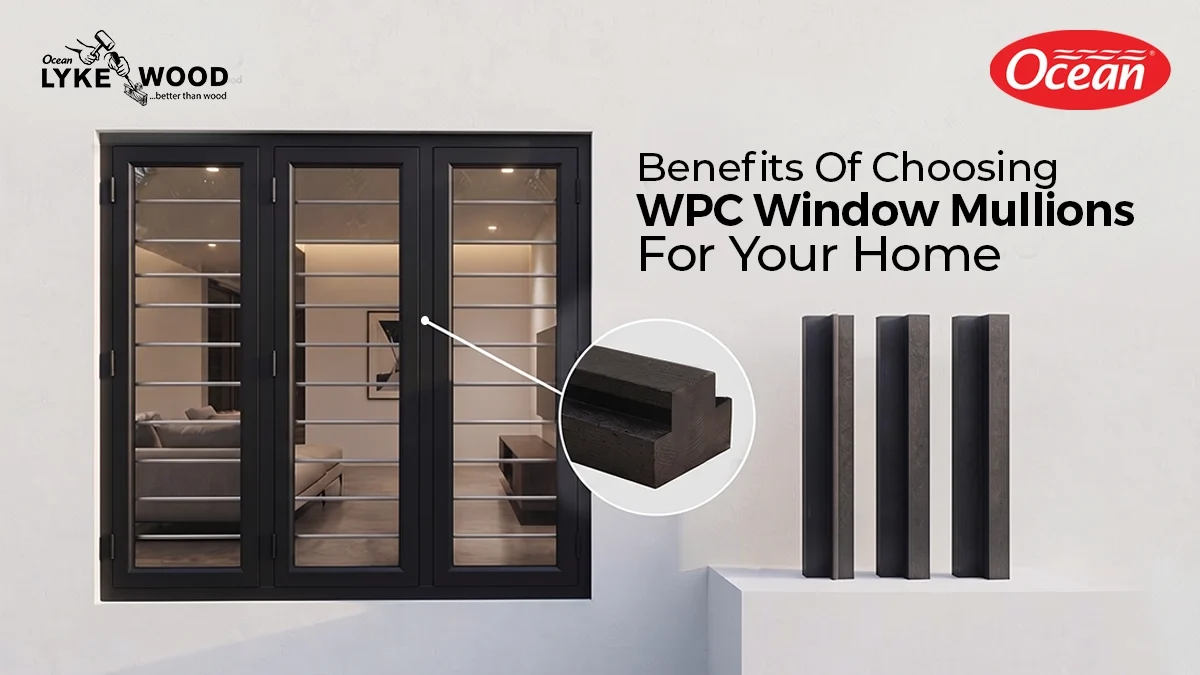
Every Kerala homeowner knows the problem. A wooden window swells in June, jams in July and shows termite trails by December. Heavy rain, sea air and humidity are hard on timber. That is why more builders now choose WPC window mullions, the dividers between window panes, made from wood plastic composite. They resist moisture and pests and need very little care. Ocean Lykewood works with WPC products, and this guide explains what makes these mullions worth considering and how to buy wisely.
What Are WPC Window Mullions?
WPC window mullions are vertical or horizontal dividers that separate window panes or sashes. They are made from wood fibre blended with thermoplastic, which makes them water-resistant and termite-proof. They also add strength to wide window openings and give casement sashes a firm surface to close against.
1. Strong Resistance to Water and Humidity
WPC handles damp conditions far better than timber.
Think of an old wooden window in June. The timber takes in moisture, swells and sticks. WPC profiles are designed to avoid this, which makes them a good choice for monsoon-proof windows. In sea-facing homes, bathrooms and kitchens, homeowners often notice the difference within the first rainy season. Because the wood fibre is bound within the plastic, the surface also resists the peeling and flaking that wet weather causes on painted timber. “Highly water-resistant” is the honest description, so seal any cut edges during installation.
2. Termite and Borer Proof
Termites and borers cannot feed on WPC the way they feed on timber.
Many Kerala homes spend money on termite treatment for timber windows again and again. Termite-proof window frames and mullions remove much of that repeat cost. Because the wood fibre is bound within the plastic, pests have no easy way in. This matters most in damp, ground-level rooms where termites are most active.
3. Low Maintenance
Wiping with a damp cloth is usually all the care WPC needs.
Timber needs polishing or repainting every few years. WPC does not. This makes it ideal for low-maintenance windows in rental homes, holiday homes and large projects. Busy families also appreciate not having to book a painter every few years.
4. Strength and Stability Against Warping
A good mullion makes the whole window stronger and keeps it straight.
A mullion splits a wide opening into smaller sections, which reduces the span that glass and sashes must carry. A double-rebate mullion has a groove on each side, so two casement windows can close neatly against it. WPC holds its shape better than solid timber through heat and humidity changes, so sashes keep closing smoothly.
5. Design and Finish Flexibility
You can have the look of wood without the weaknesses of wood.
WPC comes in wood-grain textures and can also be painted to match your interiors. Designers like that mullions, WPC window frames and WPC window shutters can all share one colour and grain. This gives the home a consistent look, whether the style is traditional or modern.
6. Eco-Friendly and Recycled Content
Many WPC products use wood waste and recycled plastic, easing pressure on forests.
Using composite instead of mature hardwood means fewer trees are cut. Recycled content differs between makers, so ask for material details rather than assuming.
7. Long-Term Value and Cost Savings
A slightly higher purchase price can pay back through lower upkeep.
WPC window mullions may cost more than basic options at purchase. But you save on repainting, pest treatment and replacing swollen parts. Over the life of a house, those savings add up. Think of it as paying once instead of paying repeatedly.
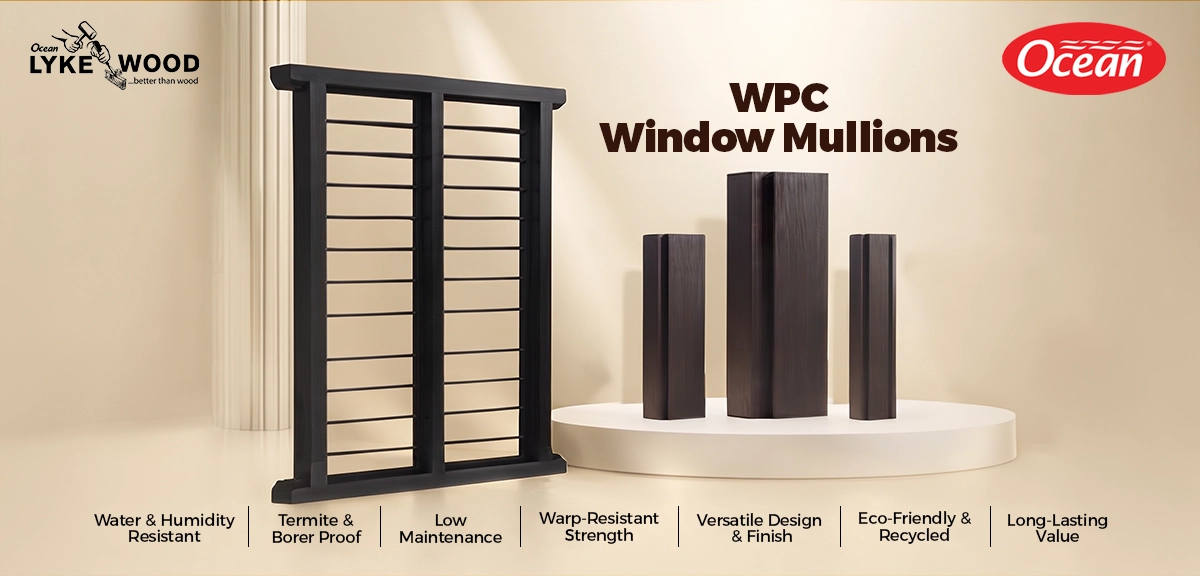
WPC vs Wood vs Aluminium vs uPVC Mullions
| Feature | WPC | Wood | Aluminium | uPVC |
| Water resistance | Highly water-resistant | Low to moderate; treated teak does better | High; check coating near the coast | High |
| Termite resistance | Highly resistant | Vulnerable unless naturally resistant or treated | Immune | Immune |
| Maintenance | Low | Regular polish or paint | Low | Low |
| Lifespan | Mid-range | Wide range; premium hardwood is costly | Moderate | Usually the most affordable |
Cost | Mid-range | Wide range; premium hardwood is costly | Moderate | Usually the most affordable |
| Appearance | Wood-grain or painted | Natural, authentic grain | Slim and modern | Clean; limited textures |
No material wins in every case. Choose based on your location, budget and the look you want.
Where WPC Window Mullions Work Best
- Sea-facing and coastal homes with salty, humid air
- Bathrooms and kitchens with steam and splashes
- Ground-floor rooms prone to termites
- Homes replacing old timber windows that swell
- Large casement windows that need an extra divider
Quick installation and maintenance tips
Let the profile adjust to site conditions before fitting. Pre-drill before screwing, so the material does not split. Seal cut edges and leave small expansion gaps as the maker advises. Clean with mild soap and water, and avoid harsh solvents or steel wool.
Common buying mistakes include choosing only on price, skipping the cut sample, ignoring warranty terms and buying thin profiles for wide openings. Another frequent error is using an unfinished profile in direct sun.
How to Choose the Right WPC Window Mullions
- Density: A denser profile usually holds screws better and feels more solid.
- Thickness: Wide windows need sturdier sections.
- UV stabilisers: These protect the surface from fading in strong Kerala sun.
- Screw-holding strength: Ask how well fittings grip before you buy.
- Finish: Look closely at the surface, whether wood-grain or paintable.
- Confirm the warranty and certified quality.
When comparing WPC brands in Kerala, Ocean Lykewood and other suppliers should be able to share these details openly.
Choose Windows You Won’t Have to Repair Every Year
WPC window mullions are a practical answer to Kerala’s monsoon, humidity and termite problems. They resist water and pests, stay stable, look good and need very little upkeep. Before you decide, compare materials honestly and check density, UV protection and warranty. When you are ready to choose the right profiles for your home, talk to the Ocean Lykewood team. Tell us about your project, and we will guide you to the right profile and finish for your windows.
FAQs
-
Are WPC window mullions suitable for Kerala’s monsoon climate?
Yes, they are well suited to it. WPC window mullions are highly water-resistant, so they do not swell, rot or peel like untreated timber. They also resist termites that thrive in damp conditions. For sea-facing or very wet locations, choose profiles with proper UV stabilisers and a sealed finish, and install them as per the maker’s guidelines.
-
How long do WPC window mullions last?
Good-quality WPC window mullions can last many years, but no single figure fits every product. Lifespan depends on density, UV stabilisers, sun exposure and installation quality. Because claims vary between makers, ask for a written warranty and use it as a practical guide to expected life.
-
What is the difference between WPC window mullions and WPC window frames?
A mullion is the divider between window panes, while a frame is the outer border that holds the whole window in the wall. WPC window frames carry the window’s weight and fix it to the wall. Mullions sit inside the frame, split a large opening into sections and give sashes a surface to close against.
-
Can WPC window mullions be painted or polished?
Yes, in most cases. WPC can be painted, stained or polished, though results depend on the profile and finish. Use paint made for composites or wood-plastic surfaces, lightly sand, and apply a suitable primer. Many buyers skip painting altogether by choosing factory wood-grain finishes, which cut repainting work later. Always check the manufacturer’s finishing advice first.
-
How do I choose among WPC brands in Kerala?
Compare products, not just prices. Ask each of the WPC brands in Kerala for density, profile thickness, UV stabiliser details, screw-holding performance and a written warranty. Request a cut sample, visit a completed project, and read reviews. Ocean Lykewood is one option to evaluate, and the same checks apply to every supplier.